Seam Laps Pulling Apart
Tape and adhesive at EPDM laps lose grip with age, and the edges curl back. Water runs under the sheet at each opening, so one wet ceiling tile can trace back to a lap several feet away.
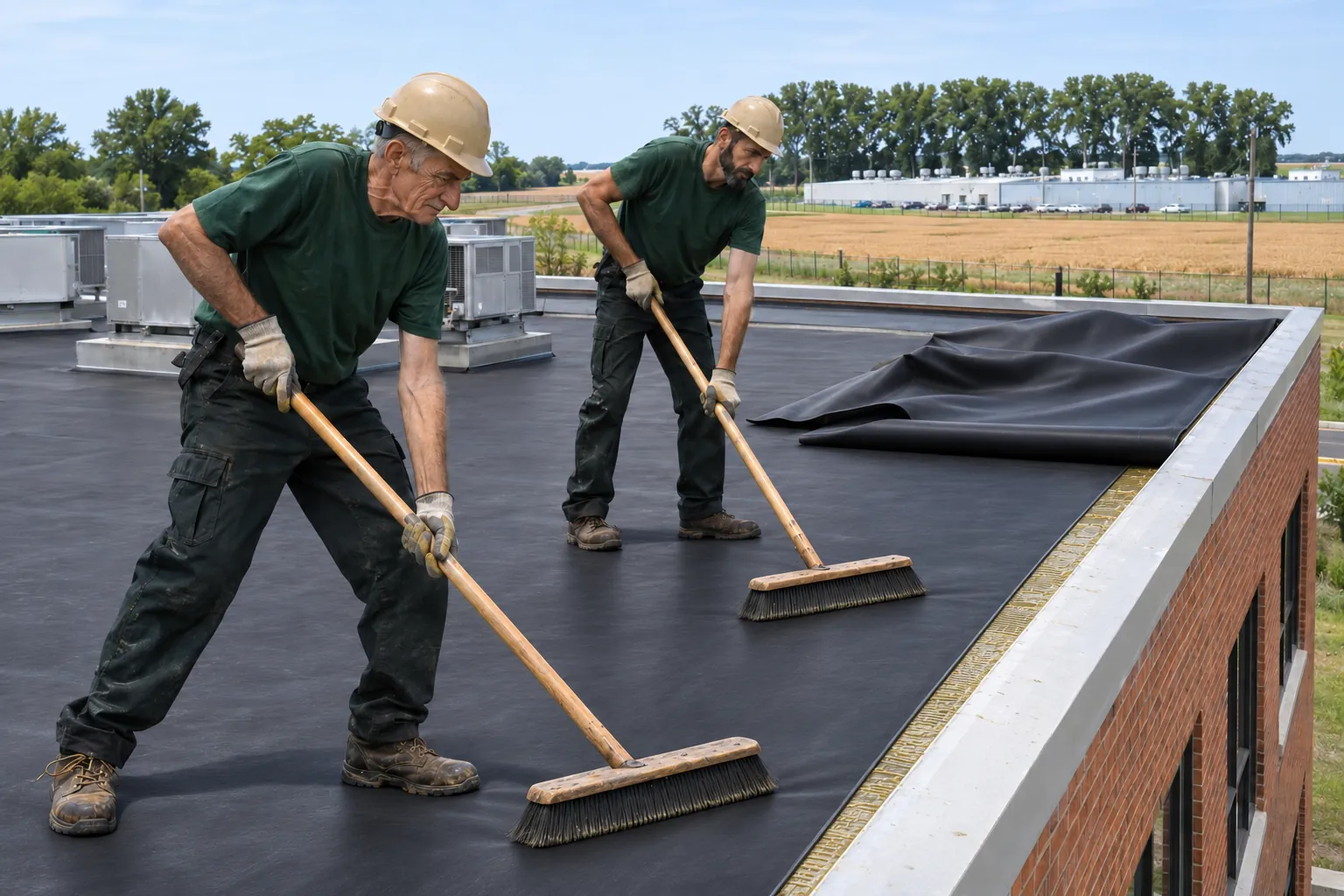
As a Kokomo EPDM roofing contractor, we install rubber EPDM membrane on flat commercial roofs, fully adhered, fastened, or ballasted, with primed and taped seams and new flashings.
Kokomo EPDM roofing fits many flat roofs well, and a few conditions point elsewhere. Match your roof to the rows below before the inspection.
| What You See | Install EPDM Now | Repair First | Another System | What We Check |
|---|---|---|---|---|
| Flat roof with a simple layout and few units | Usually fits | Rarely | Rarely | Drain layout and deck condition. |
| Aging EPDM with laps lifting in spots | Rarely | Usually fits | Rarely | How many laps have let go. |
| EPDM shrunk and pulling at most edges | Usually fits | Rarely | Rarely | Edge tension and flashing pull-back. |
| Ballasted roof where leaks are hard to trace | Usually fits | Sometimes | Rarely | Stone load and structure capacity. |
| Roof under steady oil or grease exhaust | Rarely | Rarely | Usually fits | What vents onto the roof. |
| Building that wants a white roof surface | Rarely | Rarely | Usually fits | Cooling goals inside the building. |
EPDM roofs show their age in a few predictable places. These are the conditions that turn repair calls into a replacement plan.
Tape and adhesive at EPDM laps lose grip with age, and the edges curl back. Water runs under the sheet at each opening, so one wet ceiling tile can trace back to a lap several feet away.
Rubber flashing tightens over time and pulls away from parapet walls and curbs, bridging the inside corners. Gaps open at the top edge, and wind-driven rain and meltwater get behind the membrane there.
As an old sheet shrinks, it lifts into tents at corners and along edges. The strain tears seams and pulls fasteners, and it signals that the membrane has reached the end of repair work.
Leaves and ice block drains and scuppers, and water sits on the rubber for days. That standing water finds every weak lap, speeds aging around the drain, and adds load to the deck.
Service technicians, dropped parts, and snow shovels slice rubber membrane. A few cuts patch easily, but a roof covered in old patches near every unit is wearing out where people walk.
On ballasted roofs, river stone hides the membrane, so leaks travel a long way before anyone sees them. Cores often find wet insulation across wide areas once the stone is moved aside.
An EPDM roof comes together from a few decisions made after the roof walk.
Bonding adhesive glues the rubber to the cover board across the whole surface. It lies flat, resists wind uplift without added weight, and keeps leaks easy to locate.
Fastening strips along the seams hold wide sheets to the deck. This method works well on large roofs over steel decks where full glue coverage would slow the job.
Loose-laid rubber held down with river stone goes on quickly, though the stone adds weight and hides the membrane. We check structure capacity before keeping or adding ballast.
Sheets of 60 or 90 mil and factory-applied seam tape set how the roof handles traffic and aging laps. The written scope names both, so bids compare cleanly.
Plenty of tired EPDM roofs still have a repair left in them. This table shows where a repair holds and where replacement makes more sense.
| What You See | Seam And Flash Repair | Recover Over It | Tear-Off And New EPDM | What Decides It |
|---|---|---|---|---|
| Two or three lifted laps on a dry roof | Usually fits | Rarely | Rarely | Remaining laps hold under a probe. |
| Flashing pulled back at walls only | Usually fits | Rarely | Rarely | Field membrane still lies flat. |
| Shrinkage tenting at most corners | Rarely | Sometimes | Usually fits | Sheet tension across the roof. |
| Wet insulation under ballast stone | Rarely | Rarely | Usually fits | Wet board has to come out. |
| One dry layer under worn rubber | Rarely | Usually fits | Sometimes | A cover board can go over it. |
| Seams failing across the whole roof | Rarely | Sometimes | Usually fits | Patching would never catch up. |
Meltwater or rain coming in under the rubber right now? Call us, describe where the stain shows, and we will set the visit around stopping it.
Call UsThinking about a new EPDM roof before next winter? Book a free inspection with cores, a drain check, and a written EPDM scope.
Get An EstimateAn EPDM replacement runs in four stages, and on occupied buildings each one is phased so no section stays open overnight.
We check every lap, flashing, and drain, lift ballast where it hides the sheet, and cut cores at stains and soft spots. The findings decide between repair, recover, and a new roof.
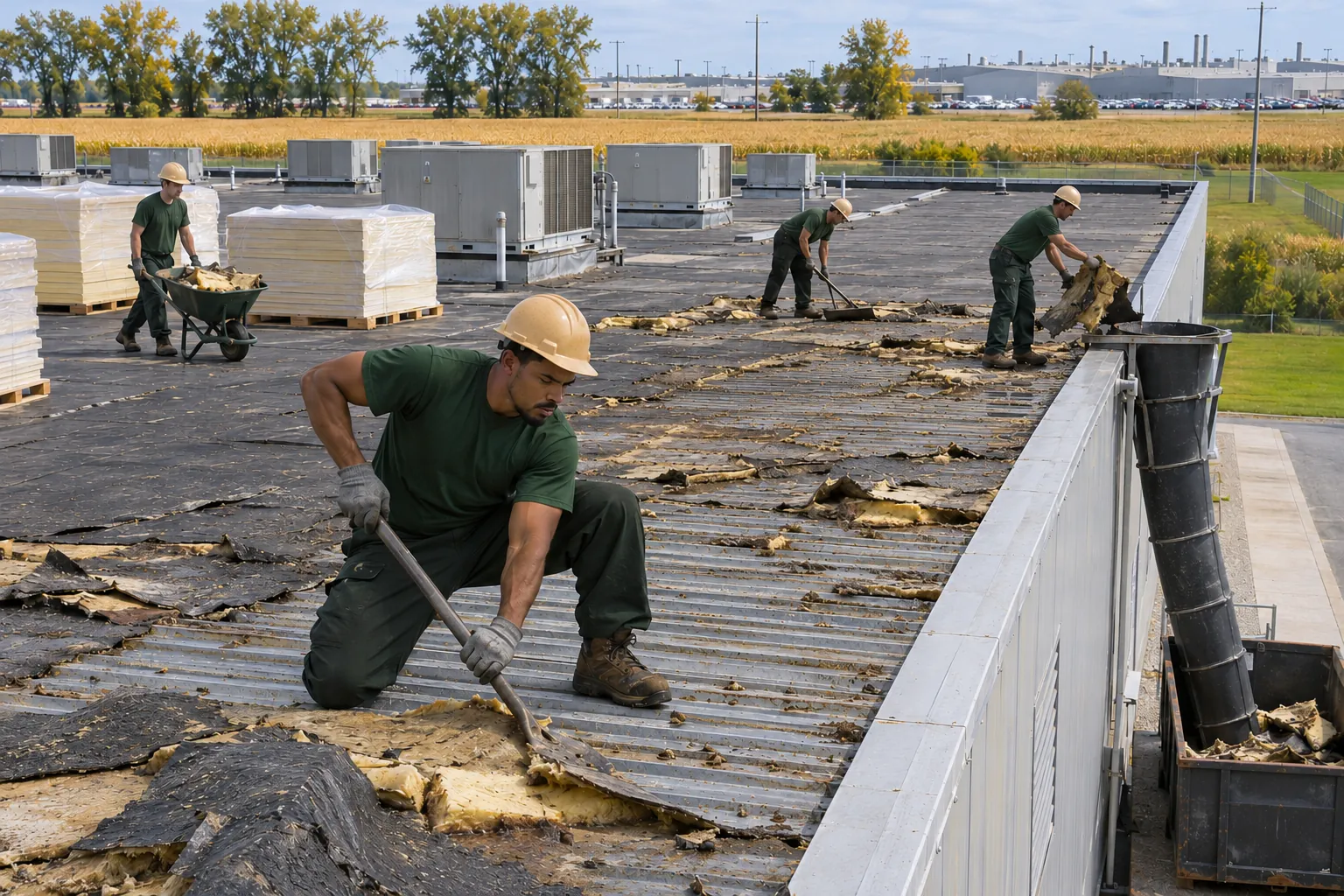
Old rubber, ballast, and wet insulation come off one section at a time down to the deck. Damaged deck gets repaired, and new insulation goes down right away so the section closes before evening.
Wide EPDM sheets are relaxed, positioned, and adhered or fastened. Laps are cleaned, primed, and joined with seam tape, then rolled so the bond takes across the whole width.
New flashing wraps parapet walls, curbs, and pipes, and drains get clamping rings set into fresh membrane. A final walk checks every lap and leaves you with care notes for winter.
EPDM is one of four systems we install. These three fit buildings with different layouts, loads, or slopes.
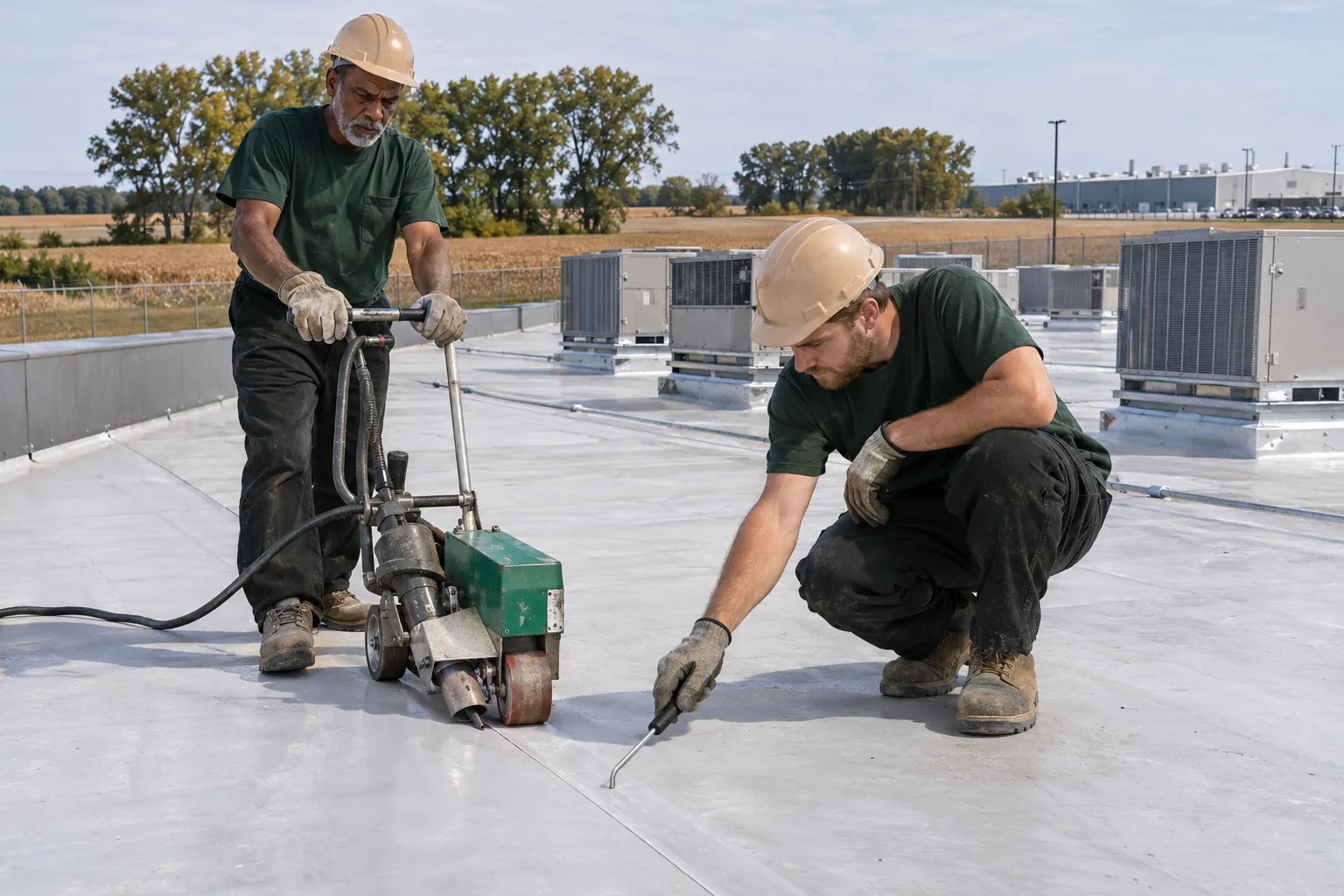
White TPO with hot-air welded seams for low-slope roofs that want a reflective surface over offices, stores, and warehouses.
Kokomo TPO Roofing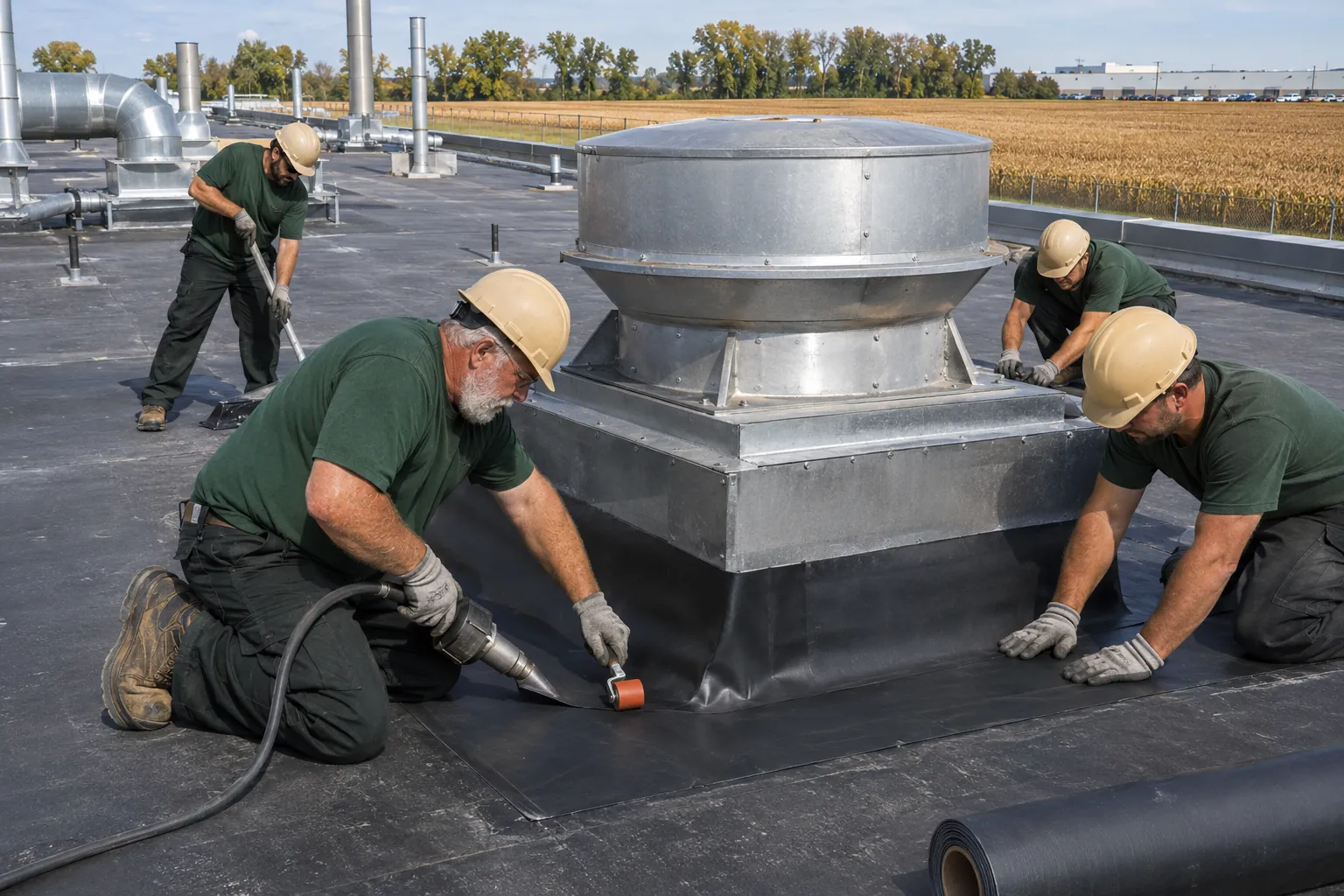
Roof replacement for plants and mills with heavy rooftop equipment, process exhaust, and work phased around production.
Kokomo Industrial Roofing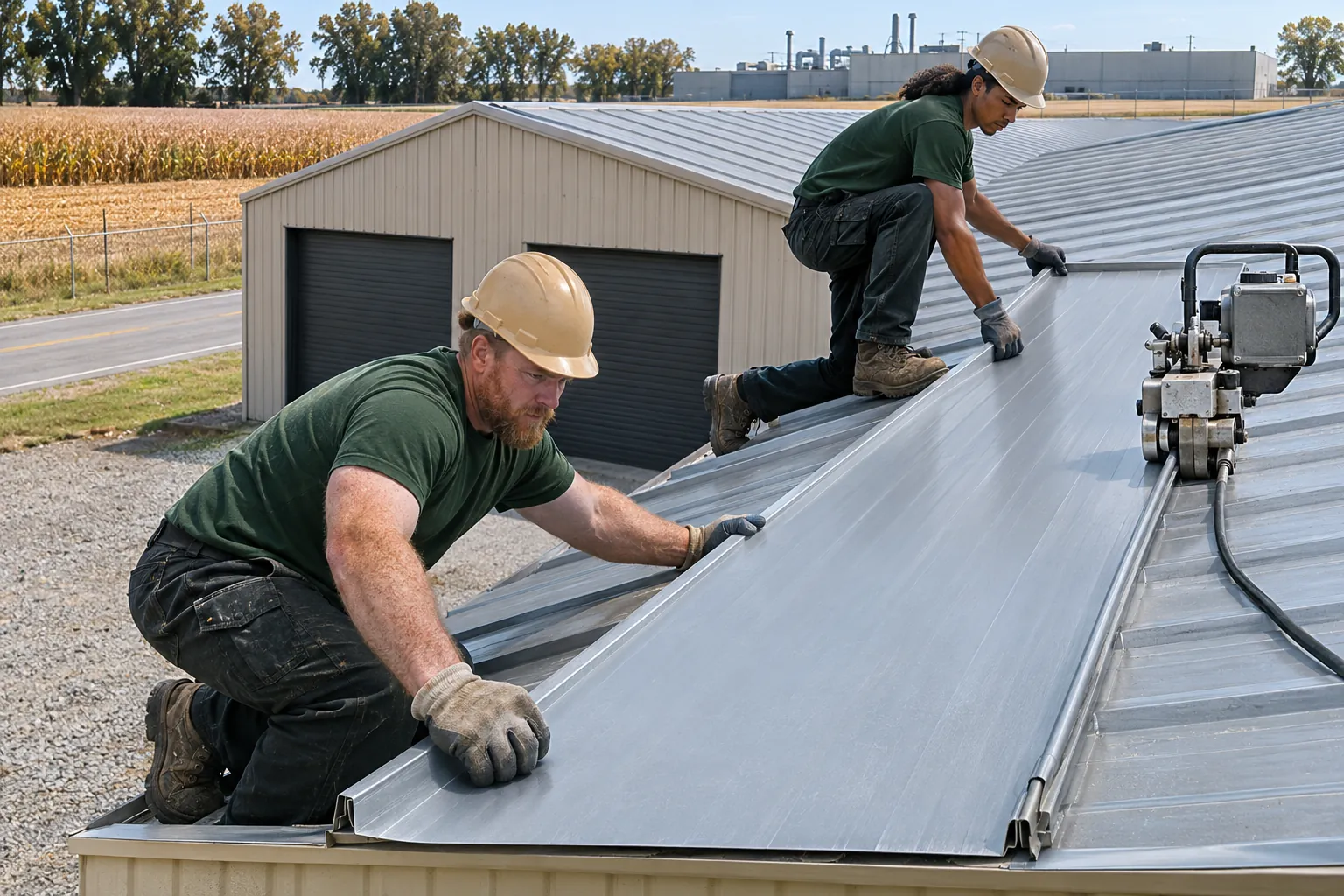
Steel panel roofs, standing seam or exposed fastener, for sloped steel buildings, shops, and farm structures around Kokomo.
Kokomo Commercial Metal RoofingEPDM is synthetic rubber membrane, almost always black, made for flat and low-slope roofs. On Kokomo buildings it goes down in wide sheets that are glued, fastened, or held by ballast stone, and the laps are joined with primer and seam tape.
It stays flexible in the cold and has decades of use on Midwest schools, offices, warehouses, and plants.
The usual list: laps opening as tape and adhesive age, flashing shrinking away from walls and curbs, punctures from foot traffic and debris, and shrinkage that tents the sheet at corners.
Clogged drains that hold water speed every one of those up, and freeze-thaw cycles find any open lap, so a yearly seam and flashing check pays off.
Adhered EPDM is glued down over its full surface, so it lies flat and resists uplift with no added weight. Ballasted EPDM is laid loose under a layer of river stone; it installs faster but adds load to the structure and hides the membrane, which makes leaks harder to find.
Structure capacity and wind exposure steer the choice.
Replacement makes sense once seams fail all over the roof instead of in a few places, the sheet has shrunk and pulled at most edges, or cores find wet insulation across large areas. One puncture or one failed flashing is a repair.
A new roof tears off to the deck where needed, then adds insulation, membrane, and new flashings.
Rubber stays flexible at low temperatures, so EPDM moves through winter expansion and contraction without cracking. Its winter weak spots are seams and flashings, where meltwater sits once ice blocks the drains.
Clear drains and scuppers and well-sealed laps matter more than the rubber itself, and snow needs careful clearing since shovel blades cut the sheet.
Ice in drains and scuppers holds meltwater on the roof, where it sits against laps, flashings, and curb edges for days. That water reaches openings a quick rain would run past.
Clearing drains before winter, heat-traced drains where ice keeps returning, and tight flashing at low points cut these leaks on TPO, EPDM, and older roofs alike.
Tell us where the rubber is lifting or leaking, and we will book a free EPDM inspection with cores and a drain check.