Building Types
Marion and Rochester lean toward plant roofs with equipment, Logansport toward occupied commercial space, Peru toward metal shops, and Wabash toward older downtown buildings. Each mix shapes the roof system and the phasing.

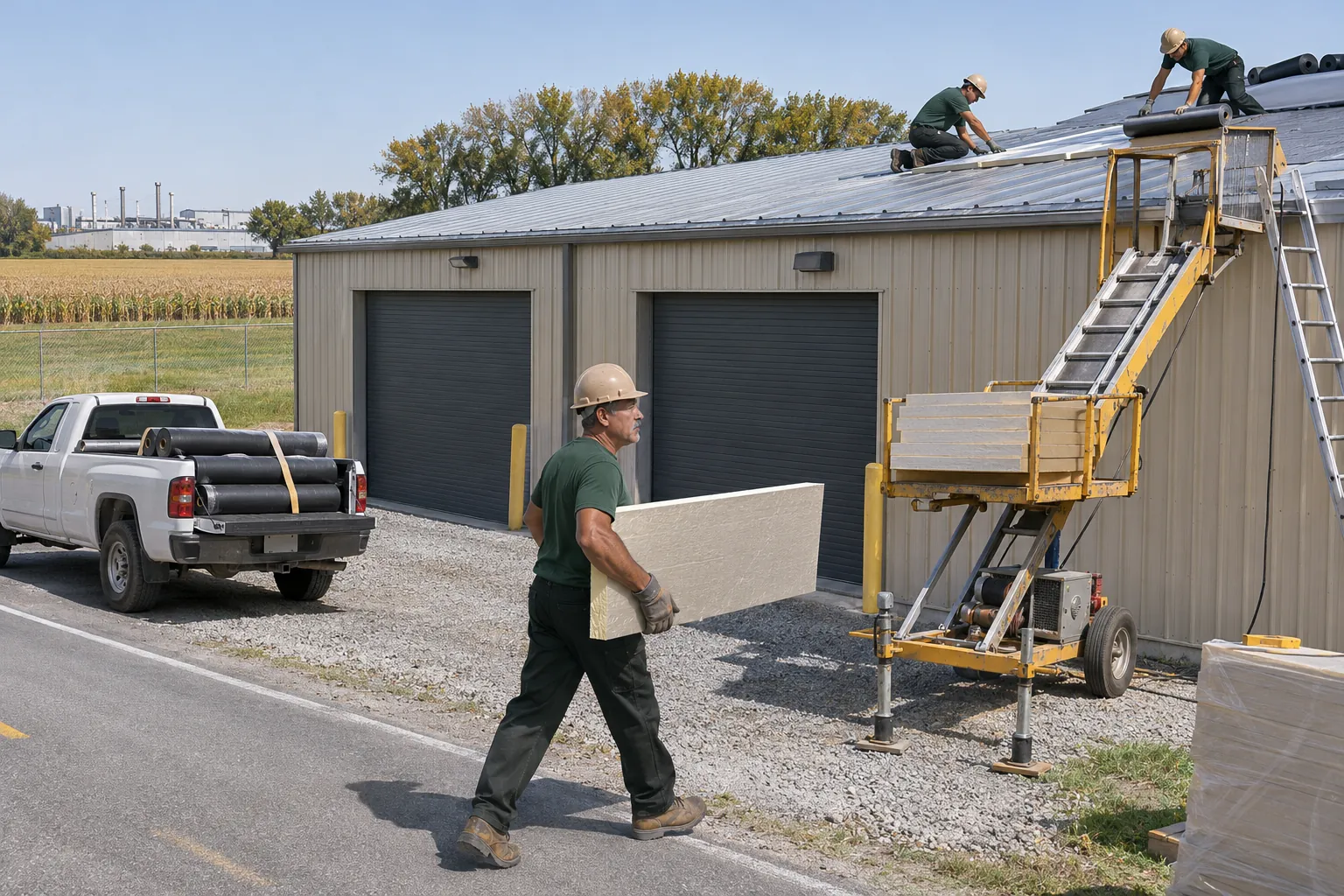
We provide commercial roofing near Kokomo in Marion, Logansport, Peru, Wabash, and Rochester, with the same inspection, written scope, and phased work on every roof.
We take commercial roofing near Kokomo in the five towns below, plus Kokomo itself, on plants, warehouses, offices, stores, and shops.
Building outside these towns? Call us or send us a message.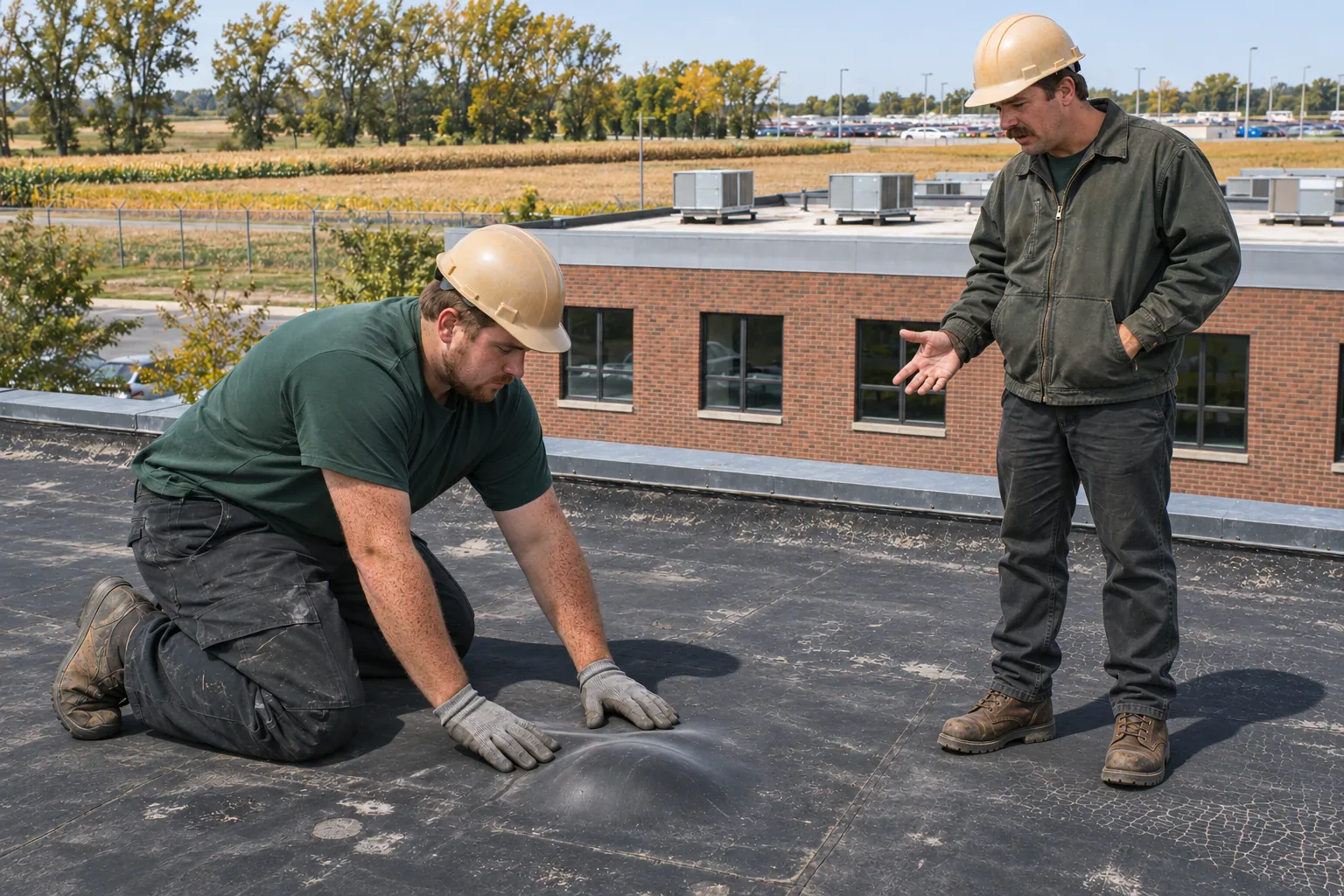
Marion jobs center on plant and warehouse roofs where production keeps going under the work. We phase replacements in one-day sections, schedule curb and intake work with maintenance staff, and match TPO, EPDM, or metal to each building section.
In Logansport, many roofs sit over tenants, stores, and stock. EPDM and TPO replacements run one section at a time with tenant notices, clear entrances, and interior protection where deck repairs are planned.
Peru buildings often mix metal roofs with flat additions. We measure slope before picking standing seam, exposed-fastener panels, membrane, or a framed retrofit, and we check shops for condensation that looks like a leak.
Older Wabash commercial buildings bring built-up roofs, parapet walls, and internal gutters. Cores count the layers and find wet insulation, then tear-off, deck and gutter repair, and new single-ply follow in that order.
Rochester plant roofs carry heavy equipment, exhaust fans, and process piping. Every penetration gets its own flashing, raised curbs are coordinated with mechanical trades, and walkway pads mark the service routes.
Water coming in at a building in one of these towns right now? Call us, tell us the town, and describe where it shows.
Call UsPlanning a replacement somewhere in the area? Book a free inspection, and we will schedule the roof walk and cores.
Get A Free EstimateThe roof systems stay the same across the area, while the buildings and permit offices change. These are the differences we plan for.
Marion and Rochester lean toward plant roofs with equipment, Logansport toward occupied commercial space, Peru toward metal shops, and Wabash toward older downtown buildings. Each mix shapes the roof system and the phasing.
Each city or county building department sets its own rules for re-roofing. We confirm requirements with the office that covers the address before a replacement starts and note any review time in the schedule.
Production lines, tenants, shoppers, and stored stock each change how a roof gets phased. The section order, quiet times, and interior protection come from what happens inside.
Older buildings tend to carry more layers and patched decks. Layer count decides between a recover and a tear-off, and it moves the price more than almost any other single item.
Downtown blocks, tight lots, and busy docks change where cranes and dumpsters can go. Staging is planned with you so debris paths stay away from doors, docks, and traffic.
Spring through fall is the main window for membrane work. Winter jobs focus on repairs and dry-ins, with full replacements set for milder weeks when adhesives and welds cure properly.
Often, yes. Kokomo and the five towns listed here are where we work most, and nearby jobs outside them are handled case by case.
Call us or send a message with the address, the building type, and what the roof is doing, and we will tell you plainly whether we can take it on.
The process is the same: a roof walk with cores, a written scope, phased work, and a final walk. What changes is the building. Marion jobs lean toward running plants, while Logansport jobs often sit over tenants and stock, so the phasing and protection plans differ.
The building department that covers each address confirms whether a re-roof needs a permit. Deck repairs, structural work, and moved rooftop equipment can change the answer. We check with that office before work starts and build any review time into the schedule.
Prices come from each roof itself: size, layers to remove, wet insulation, the system chosen, penetrations to flash, access, and phasing. Distance plays a small part in staging. A free inspection prices your roof from measurements and cores.
We call back to set a time for the roof walk and ask about access, the building type, and where water shows. The inspection includes cores and photos, and you receive a written scope with the system that fits and a price.
Tell us the town and the building, and we will schedule a free roof inspection with cores and a written scope.