Several Layers Stacked on the Deck
Built-up roofs were often covered again instead of torn off. Extra layers add weight, trap moisture between them, and leave no room for another recover under code limits.
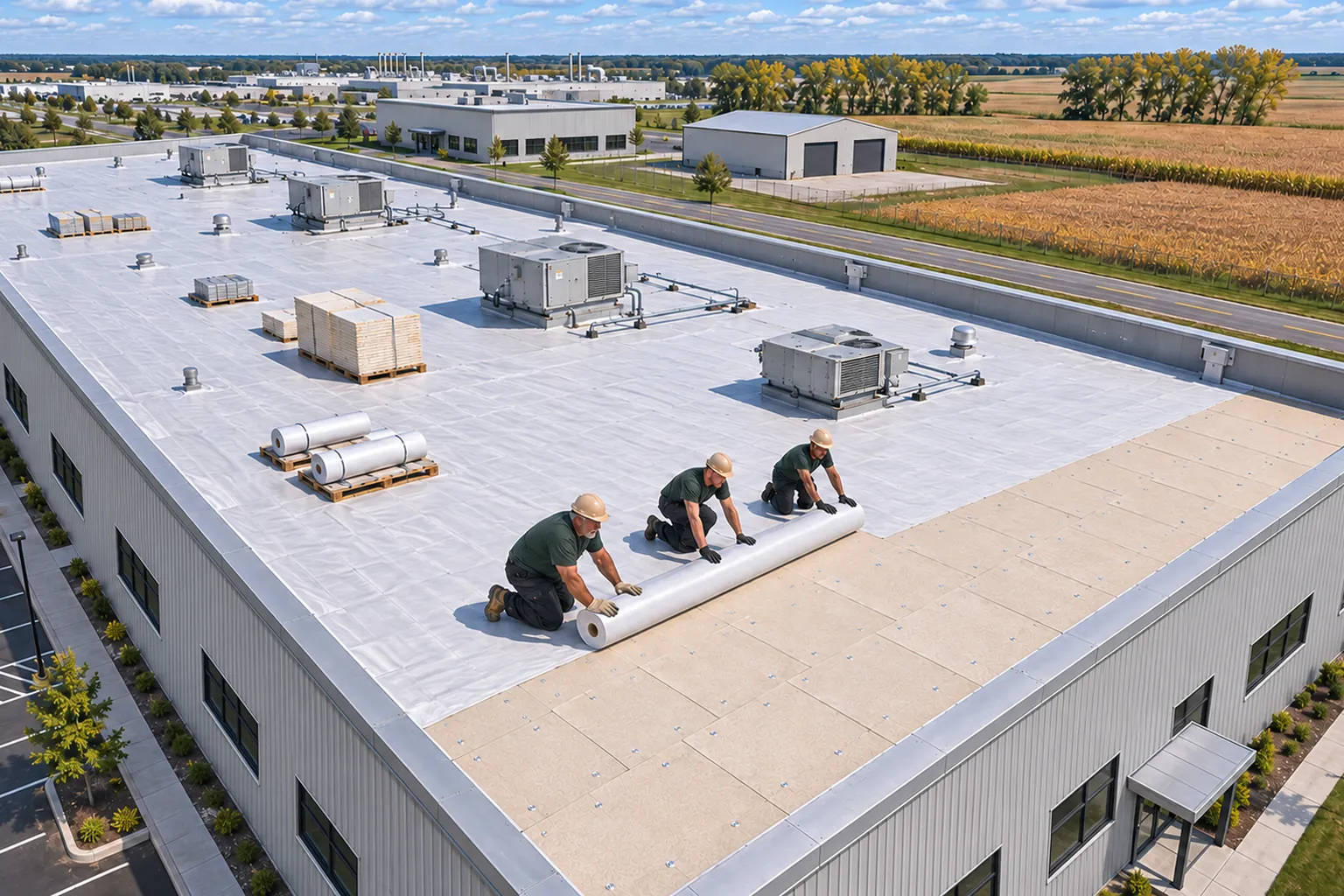
As a Wabash commercial roofing contractor, we tear off old built-up roofs on Wabash commercial buildings, repair parapets, gutters, and decks, and install new TPO or EPDM.
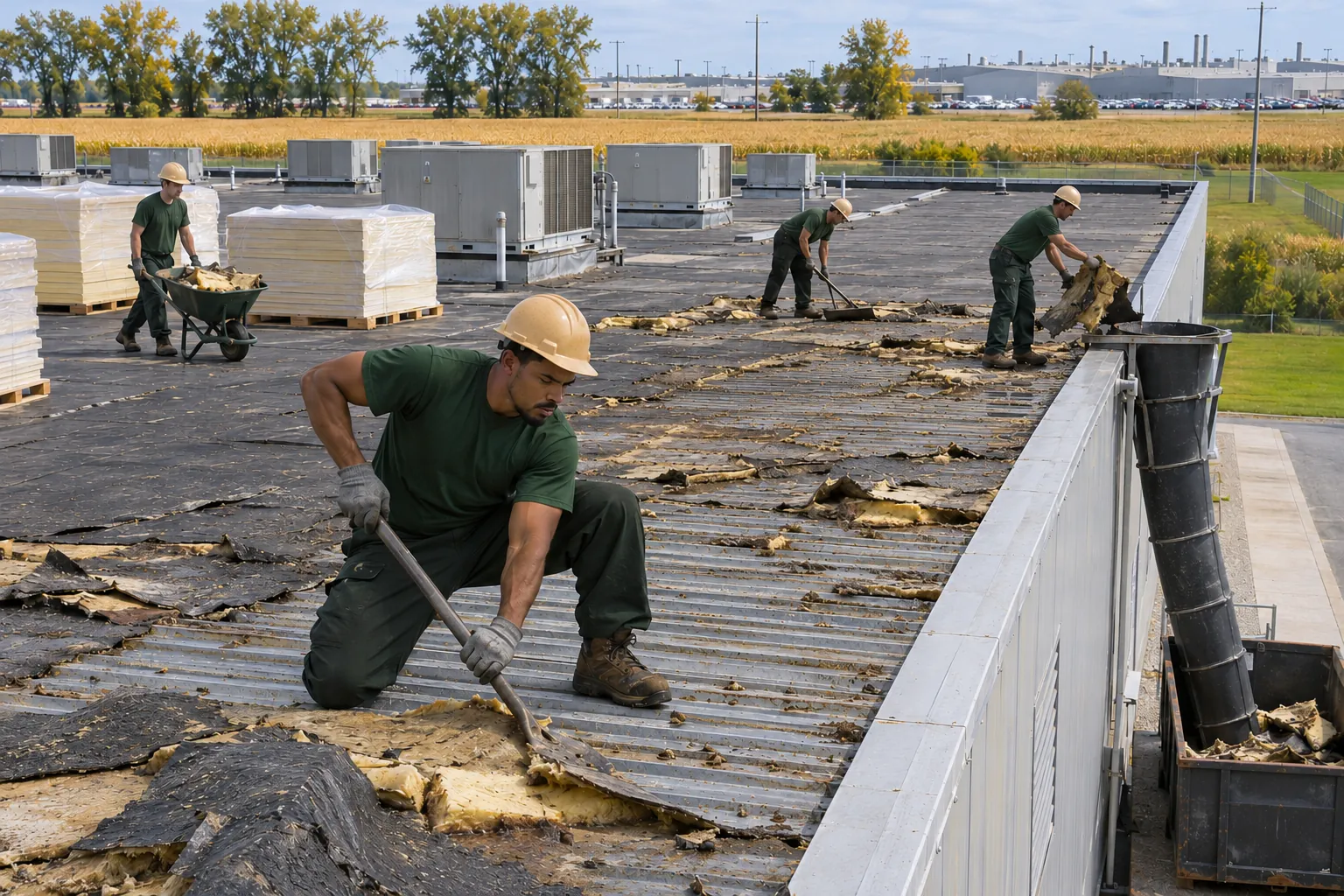
Wabash commercial roofing work often means removing layers of built-up roofing on buildings that have been patched for years. Cores show how many layers sit on the deck and how wet the insulation is before anything is priced.
Older buildings bring parapet walls, internal gutters, and decks with past repairs. Those get fixed first, so the new single-ply membrane goes onto a dry, solid base.
Older commercial roofs in Wabash carry decades of patches and layers. These conditions show up most when we walk them.
Built-up roofs were often covered again instead of torn off. Extra layers add weight, trap moisture between them, and leave no room for another recover under code limits.
Brick and block parapets crack at coping joints, and old flashing pulls away from the wall. Water enters at the top and runs down inside the wall onto ceilings below.
Built-in gutters behind parapets rust at seams and corners and overflow into the building. A new roof relines them and ties the membrane into the gutter edges.
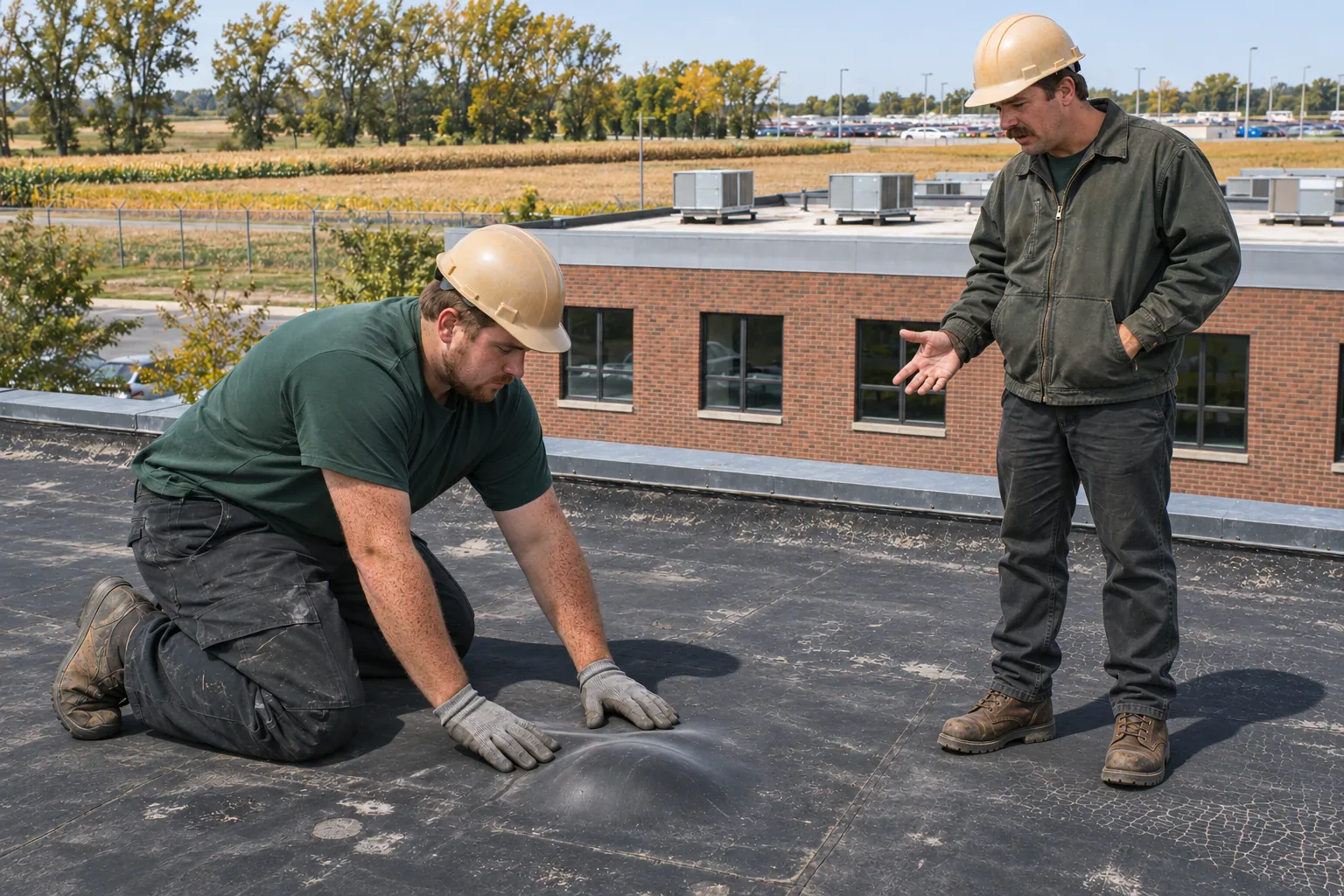
Trapped moisture in built-up layers swells into blisters that crack in summer heat. Soft areas underfoot usually mean the insulation below has been wet for a long time.
Decades of leaks rot wood decks and rust steel ones, and past repairs leave mixed materials. Tear-off exposes those areas so they are replaced before new insulation goes down.
Low spots along parapet walls hold water where scuppers sit too high or have clogged. Tapered insulation and reset scuppers move that water off the new roof.
On older Wabash buildings, layer count and moisture decide most jobs. Here is how repair, recover, and full tear-off compare.
| What You See | Patch And Flash Repair | Recover Over It | Full Tear-Off | What Decides It |
|---|---|---|---|---|
| One dry built-up layer with a few blisters | Usually fits | Sometimes | Rarely | Dry cores and one layer on the deck. |
| Two or more layers already in place | Sometimes | Rarely | Usually fits | Code limits on adding another layer. |
| Wet insulation between old layers | Rarely | Rarely | Usually fits | Trapped moisture has no way to dry. |
| Parapet flashing failing on one wall | Usually fits | Rarely | Rarely | Field roof still dry and firm. |
| Internal gutters rusted through | Sometimes | Rarely | Usually fits | Gutter condition along each wall. |
| Deck soft in several areas | Rarely | Rarely | Usually fits | Deck repairs need open access. |
After the old layers come off, one of these systems goes on most older Wabash buildings.
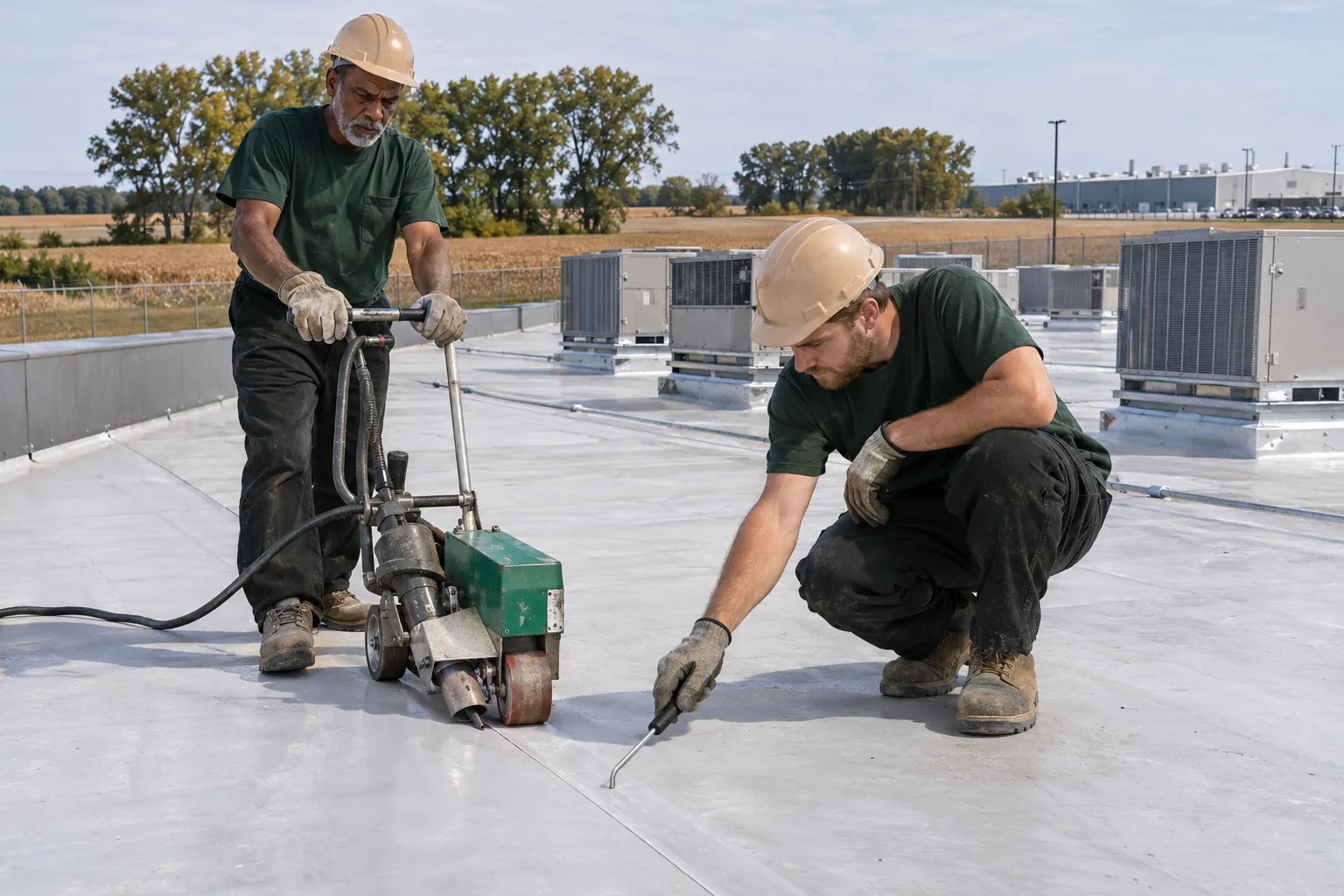
White TPO welded into parapet and gutter flashing, a fit for Wabash storefront blocks and offices that want a reflective roof.
Kokomo TPO Roofing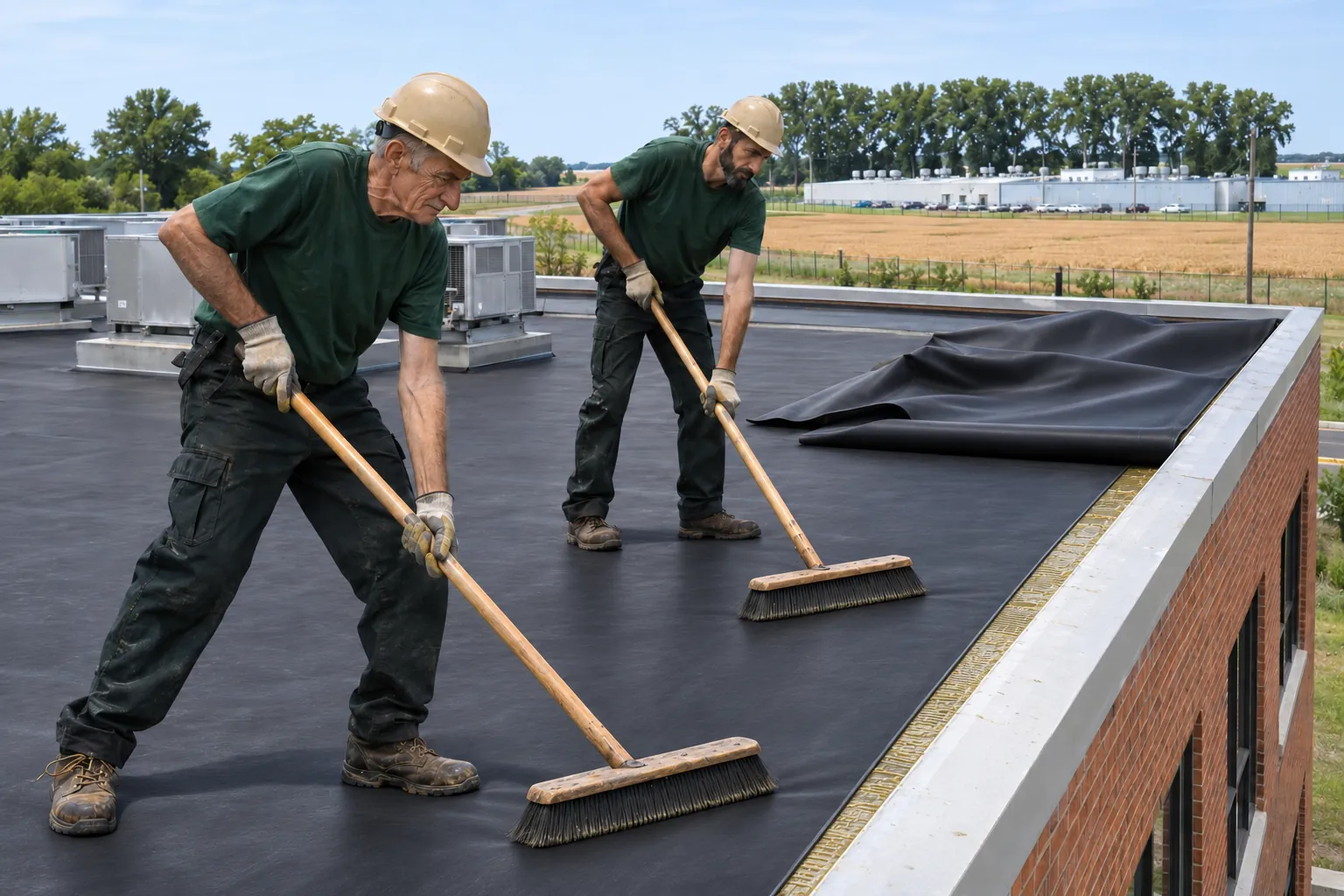
EPDM rubber adhered over new tapered insulation, with flashing up parapet walls and around scuppers on older Wabash roofs.
Kokomo EPDM Roofing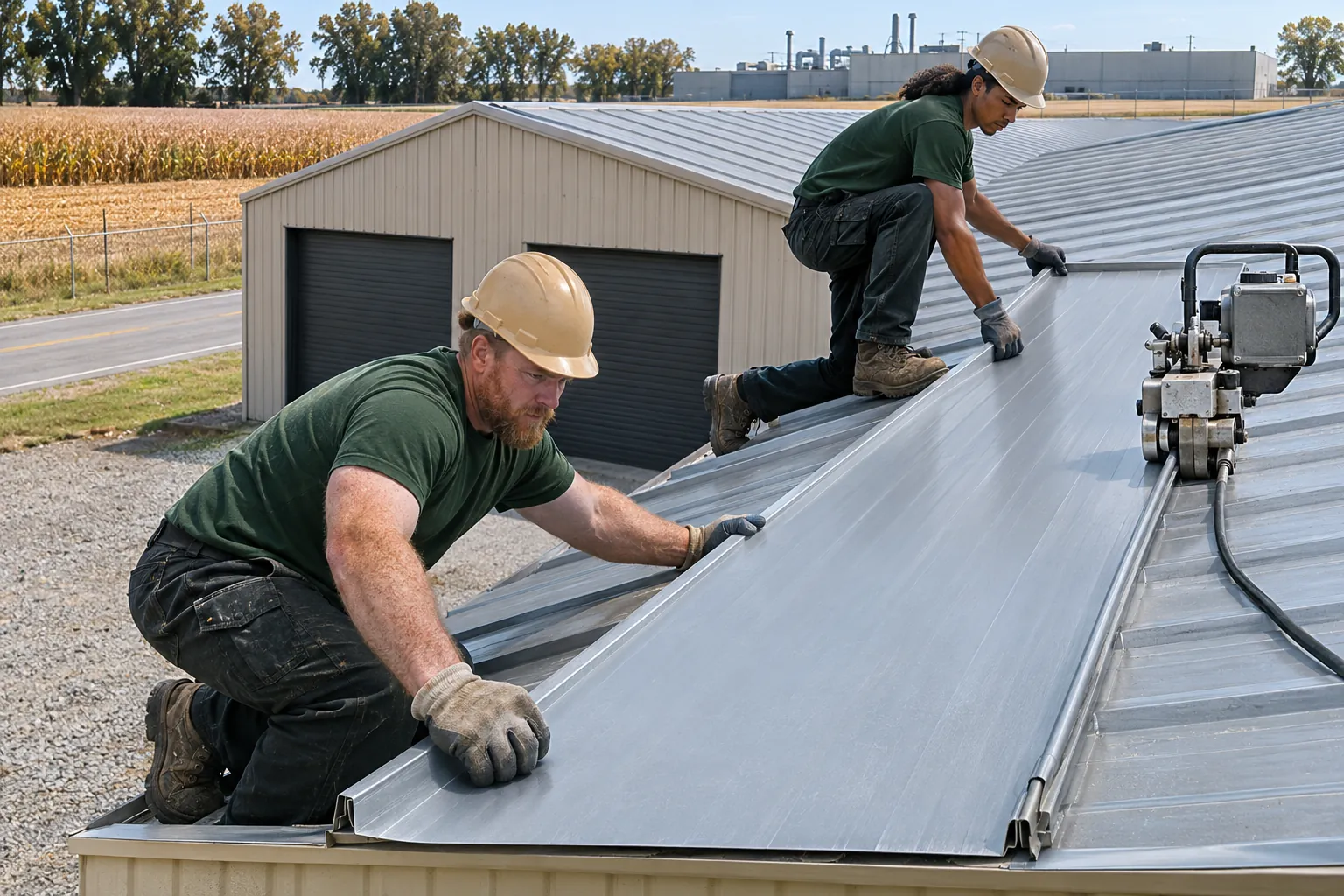
Metal panels for Wabash shops, warehouses, and additions with sloped roofs, or framed over flat roofs to add pitch.
Kokomo Commercial Metal RoofingCeilings staining under a Wabash parapet or gutter right now? Call us, describe where it shows, and we will check the wall and gutter above it first.
Call UsPlanning a tear-off on an older Wabash building? Book a free inspection with cores and a layer count.
Schedule Your Free InspectionOlder buildings add a few steps, and each stage below handles them in order.
Cores show every layer, the insulation condition, and the deck. We also check parapet walls, coping, and internal gutters from the roof and from inside the building.
Old layers come off in sections down to the deck, and debris leaves by chute or crane away from entrances. Each open section is dried in before evening.
Rotted or rusted deck is replaced, parapet joints are sealed, and internal gutters are relined. Tapered insulation then builds slope toward scuppers and drains.
TPO or EPDM goes on over the new insulation, then up parapet walls and into gutters with new flashing and coping metal. A final walk covers every wall line.
Besides Wabash, we cover Kokomo and the four towns listed here.
Need a roof somewhere else? Call us or send us a message.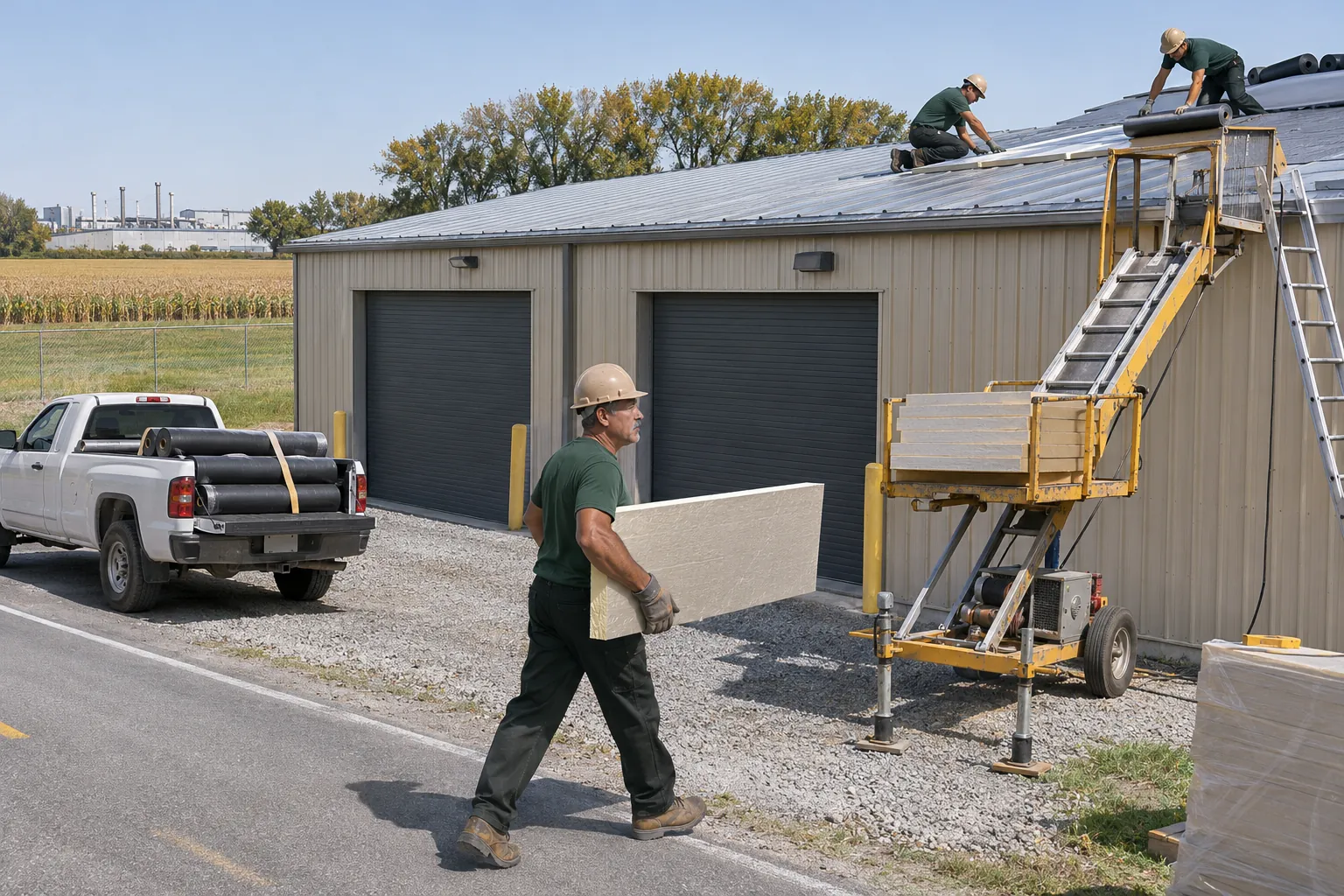
Older built-up roofs on Wabash commercial buildings are usually replaced with single-ply TPO or EPDM over new insulation, once the old layers are removed to the deck. Parapet walls, internal gutters, and patched decks often need repair first.
The new system is picked after cores show what sits under the surface and how the roof drains.
Layer count and moisture. A contractor should take cores to see how many layers sit on the deck and whether the insulation between them is wet, then inspect parapet walls, coping, and internal gutters.
Those findings decide between a recover and a full tear-off, and they belong in the written proposal with photos.
On older buildings, price climbs with the number of layers to remove, the amount of wet insulation, deck repairs found after tear-off, parapet and gutter work, and the new system and insulation chosen. Debris removal from downtown sites and access also count.
A free inspection with cores prices those items for your building.
Usually, yes. Tear-off runs in sections so only part of the roof is open, debris moves away from entrances, and each section is dried in before evening. Noisy days are scheduled with you, and interior protection goes up where deck repairs are planned.
Only in limited cases. If cores show a single dry layer and a solid deck, a recover board and new membrane can go over it.
Two or more existing layers, wet insulation, or soft deck call for a full tear-off, both to meet code limits on layers and to give the new roof a dry base.
Send us the Wabash address and what the roof and walls are doing, and we will book a free inspection with cores.