Membrane Worn Thin on Service Routes
Technicians walking the same path for years scuff and puncture the membrane between the hatch and each unit. Leaks along those routes are the first sign that pads were missing.

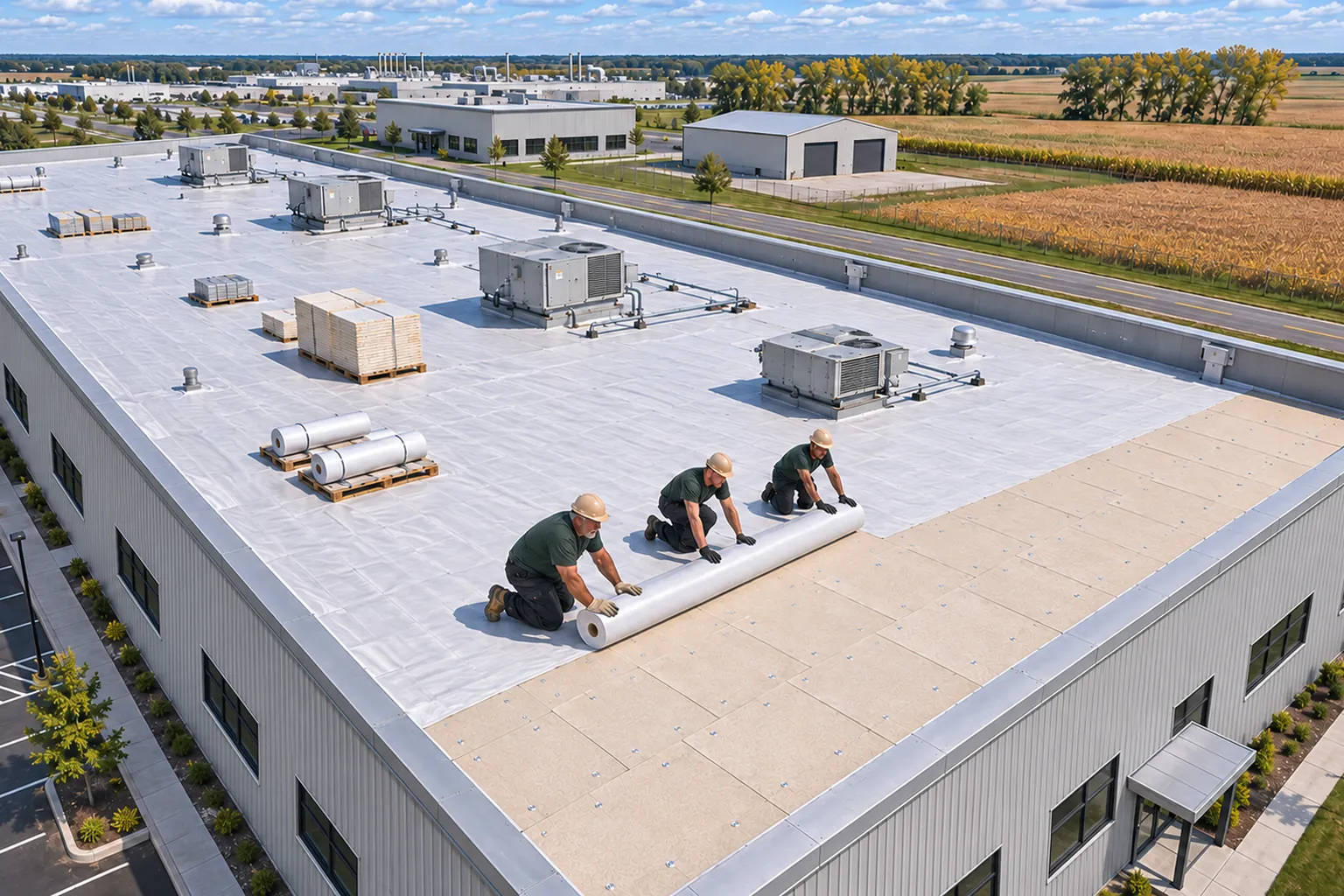
As a Rochester commercial roofing contractor, we install and replace roofs on plants and commercial buildings in Rochester, with flashing at every unit and walkway pads on service paths.
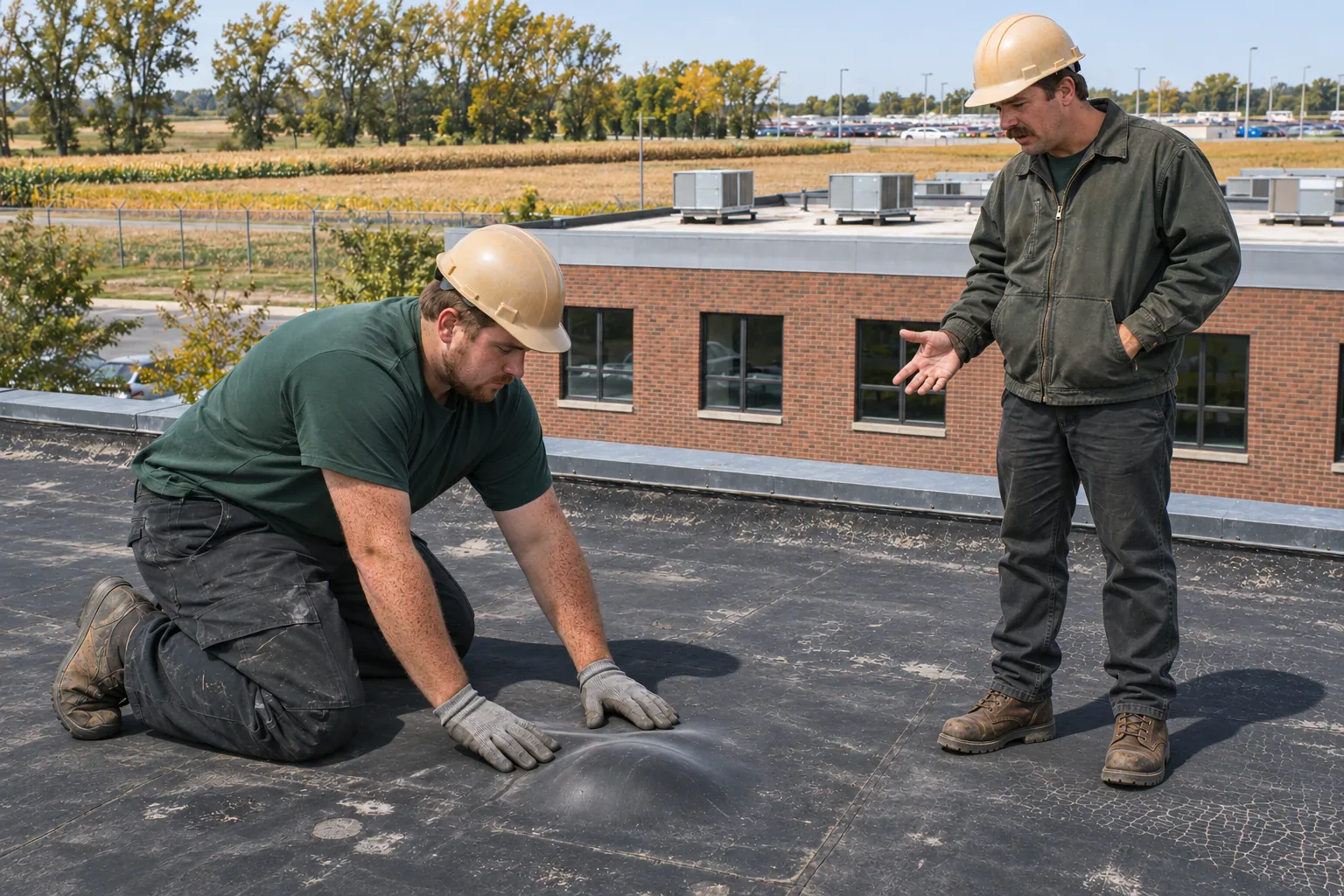
Rochester commercial roofing jobs often involve plant roofs crowded with rooftop units, exhaust fans, and process piping. Every penetration gets its own flashing detail, and service paths get walkway pads so technicians stay off the field membrane.
We survey the roof with your maintenance lead, count penetrations, and mark the service routes before writing the scope.
Equipment-heavy roofs in Rochester wear out around the things people service. These six conditions show up most.
Technicians walking the same path for years scuff and puncture the membrane between the hatch and each unit. Leaks along those routes are the first sign that pads were missing.
Process exhaust fans drop grease and residue that soften some membranes over time. The new roof is chosen for what lands near each fan, with drains checked for buildup.
Pipe runs on blocks or bare sheet cut into the membrane as they move with temperature. New supports on pads spread the load and protect the roof below them.
Older units often sit on curbs too low for the flashing height a new roof needs. Raised curbs are coordinated with your mechanical contractor before tear-off reaches them.
Hot stacks dry out flashing and sealant until it cracks and lets water in. Collars and flashing built for higher temperatures replace the failed material.
Filters, parts, and dirt left behind after service clog roof drains and hold water around equipment. Drain work and housekeeping notes are part of every closing walk.
Equipment-heavy roofs often need targeted work before a full replacement. The table shows where each job usually lands.
| What You See | Targeted Repair | Recover | Full Replacement | What Decides It |
|---|---|---|---|---|
| Leak at one curb on a dry roof | Usually fits | Rarely | Rarely | Cores beside the curb test dry. |
| Worn service paths over dry insulation | Usually fits | Sometimes | Rarely | Pads plus patches end the wear. |
| Residue softening the membrane | Rarely | Sometimes | Usually fits | How far the softening spreads. |
| Curbs too short for new flashing | Sometimes | Sometimes | Usually fits | Unit work planned with mechanical. |
| Wet insulation around many units | Rarely | Rarely | Usually fits | Core map around the equipment. |
| One dry layer under worn membrane | Rarely | Usually fits | Sometimes | Deck and insulation test dry. |
These three systems cover most Rochester plant and commercial roofs.
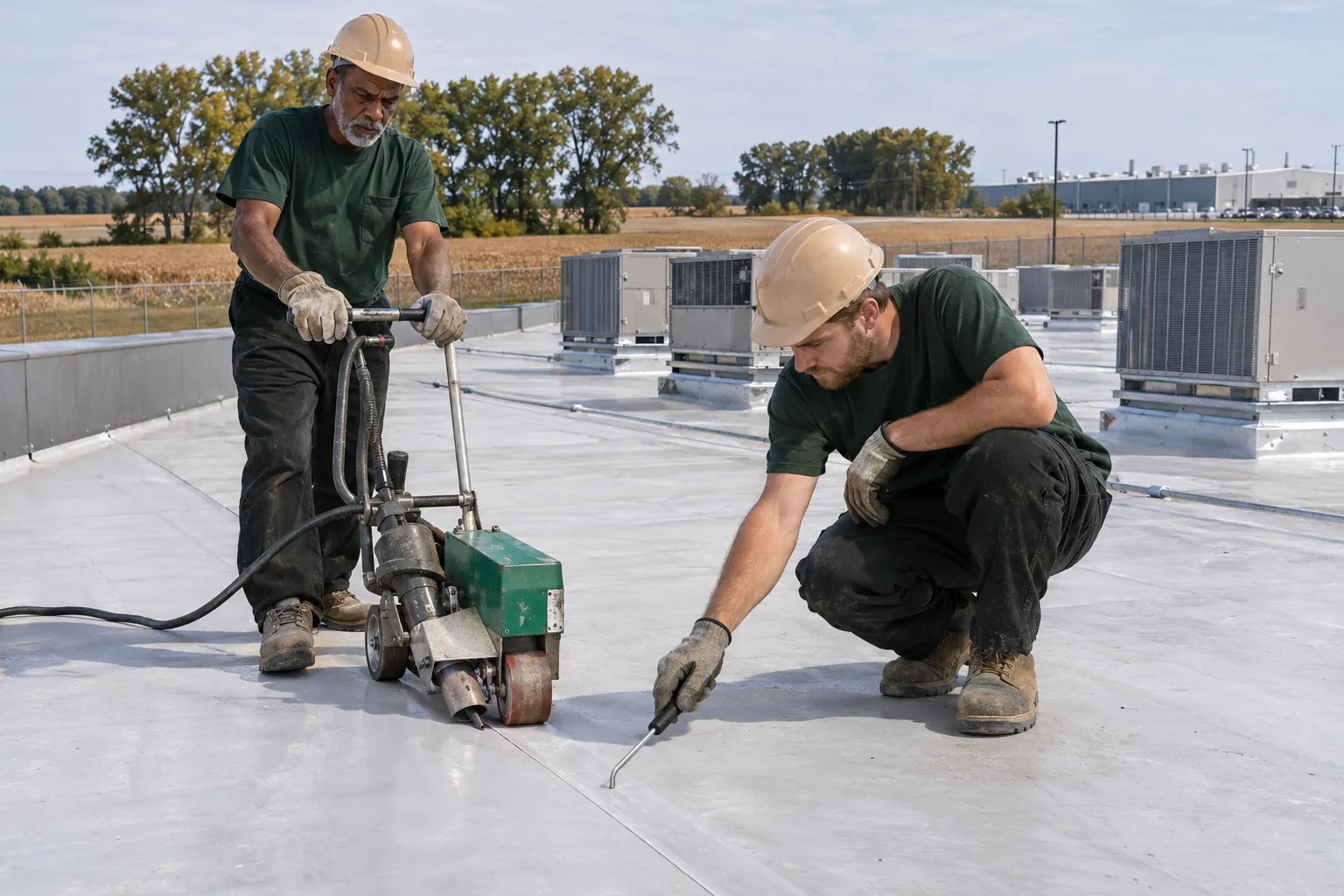
White TPO with welded flashings around curbs and pipes, a strong fit for Rochester roofs crowded with equipment.
Kokomo TPO Roofing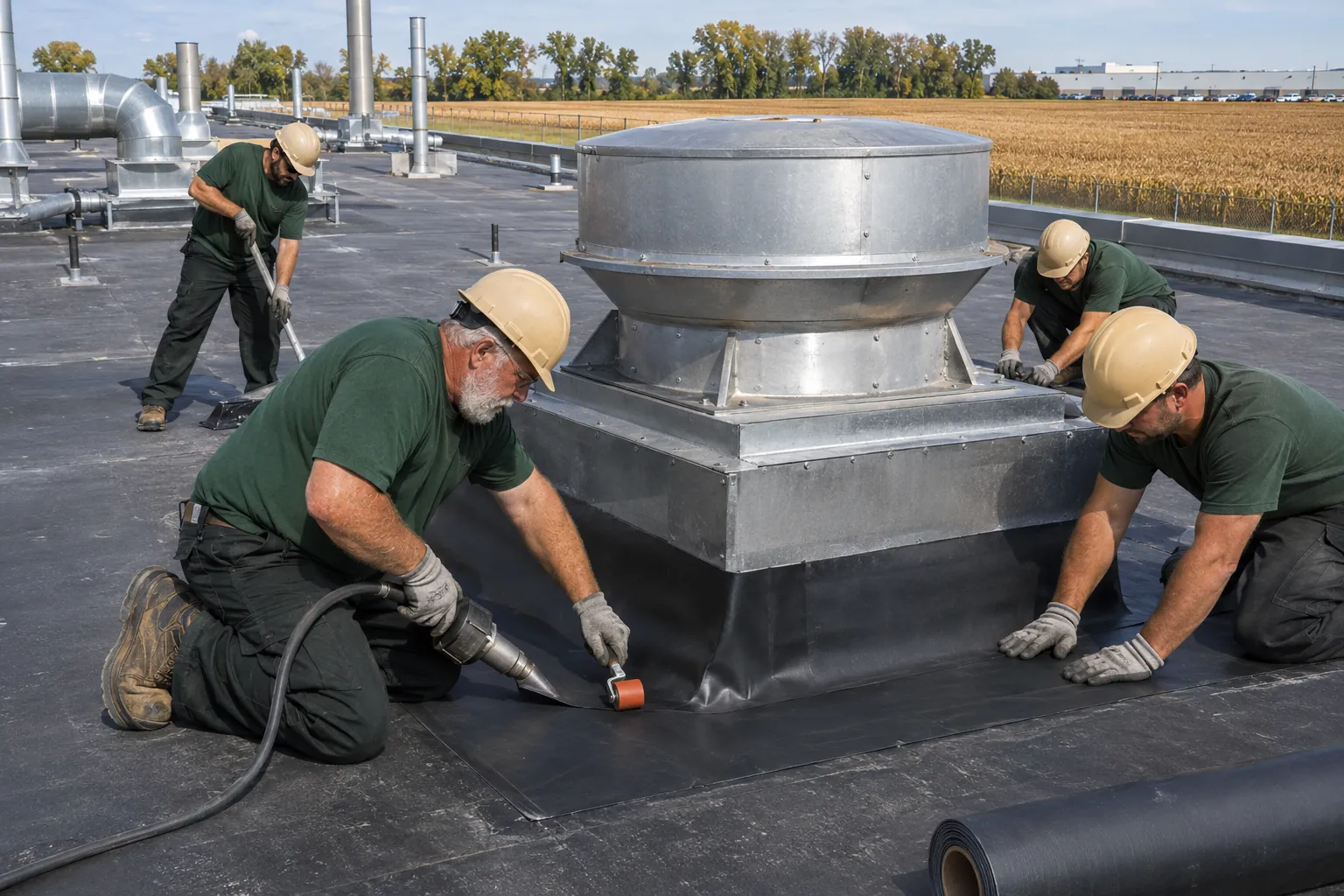
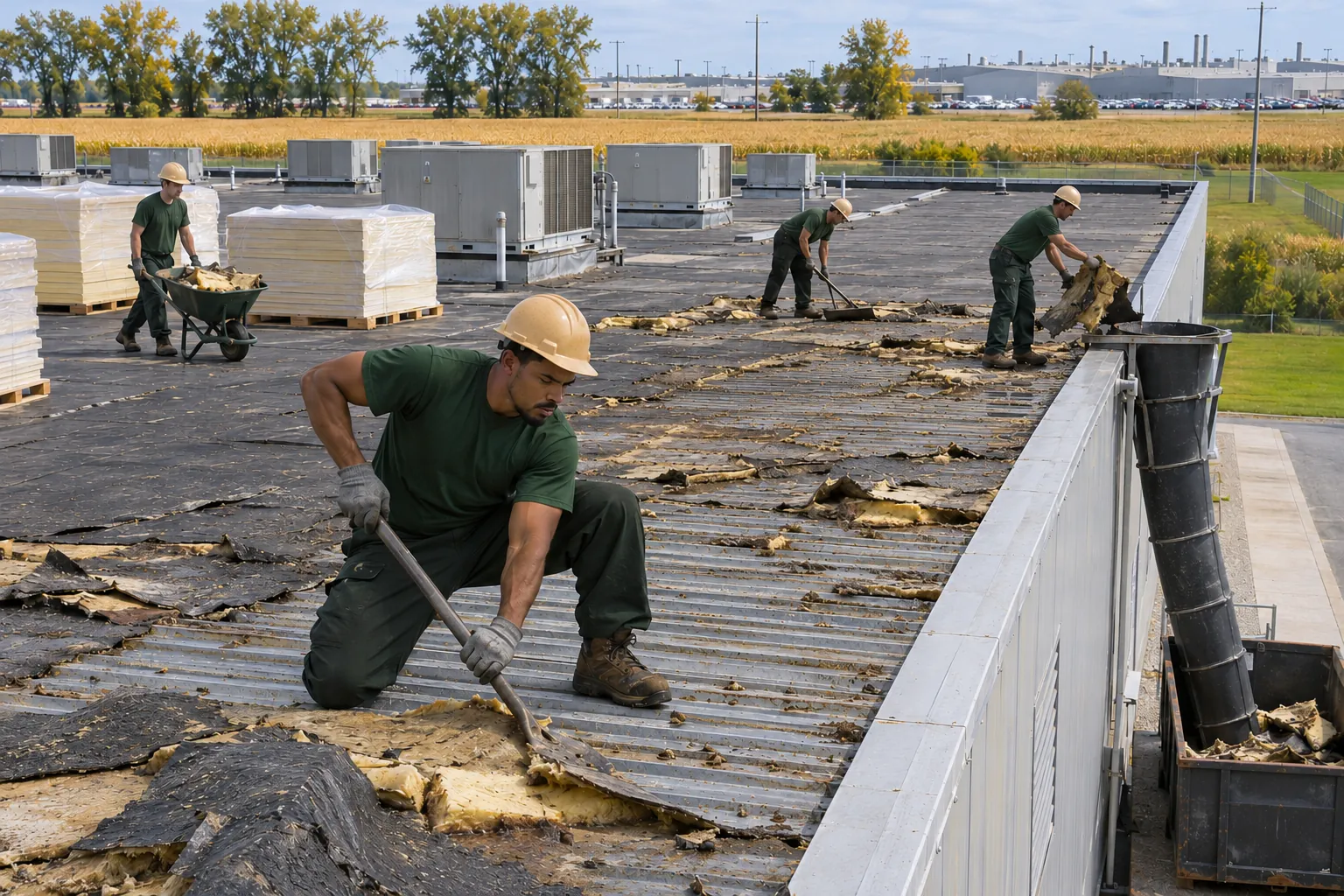
Phased industrial roof replacement for Rochester plants, with penetration surveys, raised curbs, and work timed around production.
Kokomo Industrial Roofing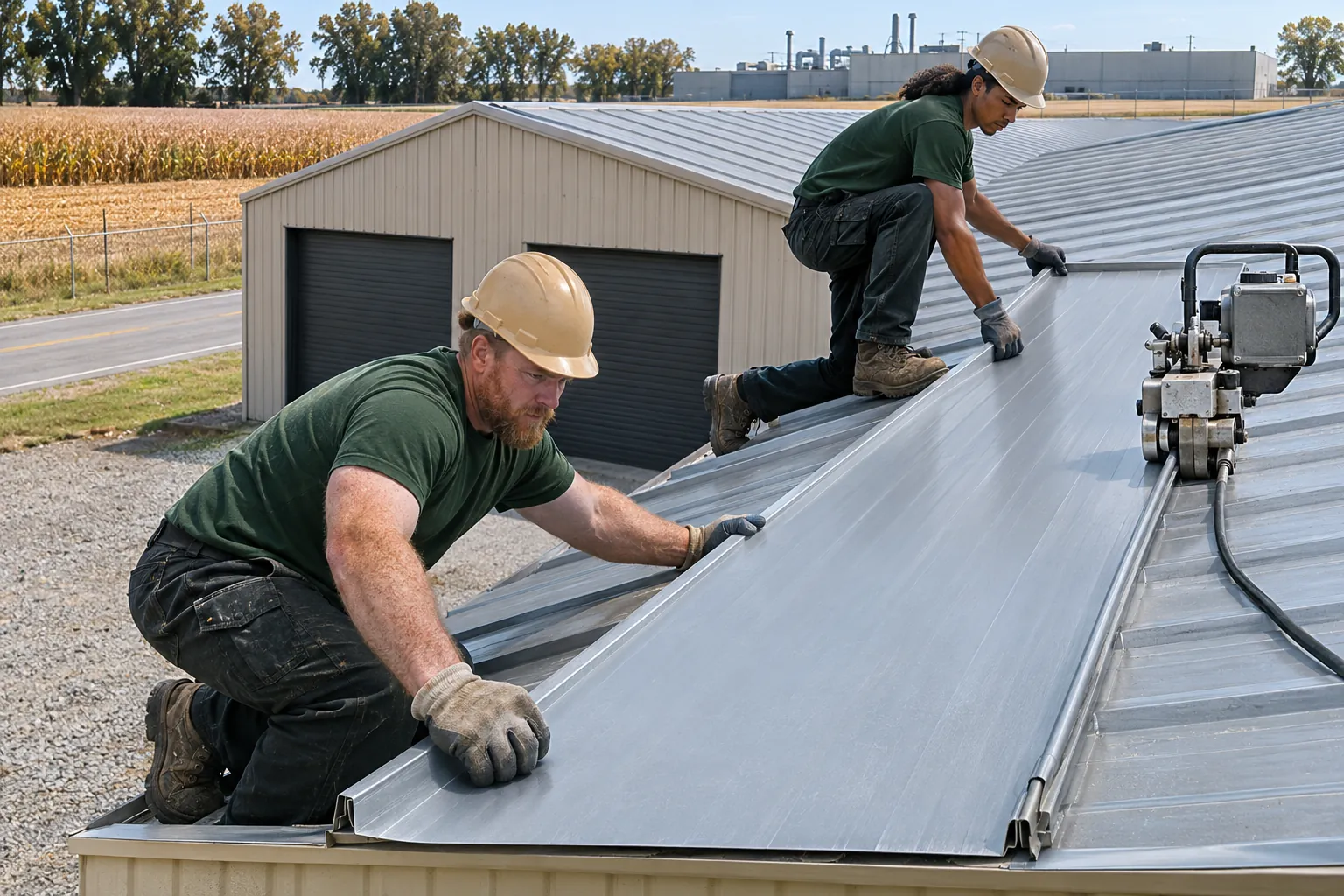
Metal panels for Rochester shops and storage buildings with sloped roofs, new or framed over a flat roof.
Kokomo Commercial Metal RoofingWater dripping near a unit or fan in Rochester right now? Call us and tell us which unit, and we will start the visit at that curb.
Call UsPlanning a new roof for an equipment-heavy Rochester building? Book a free survey with a penetration count.
Get A Free EstimatePlant roofs in Rochester move through four stages, each one built around the equipment and the people who service it.
We count every unit, fan, stack, pipe, and drain with your maintenance lead and take cores around them. The survey marks service routes and curbs that need raising.
Raised curbs, disconnects, and crane lifts are scheduled with your mechanical contractor. Sections are ordered so equipment keeps running outside planned shutdown windows.
Sections are torn off, insulated, and covered, then each curb, pipe, and stack gets its own flashing detail before the section closes for the day.
Walkway pads go from the hatch to every unit along the marked routes, and drains are cleared. The final walk with your maintenance lead covers every penetration.
Rochester is one of six towns we roof, along with Kokomo and the four below.
Somewhere else in Indiana? Call us or send us a message.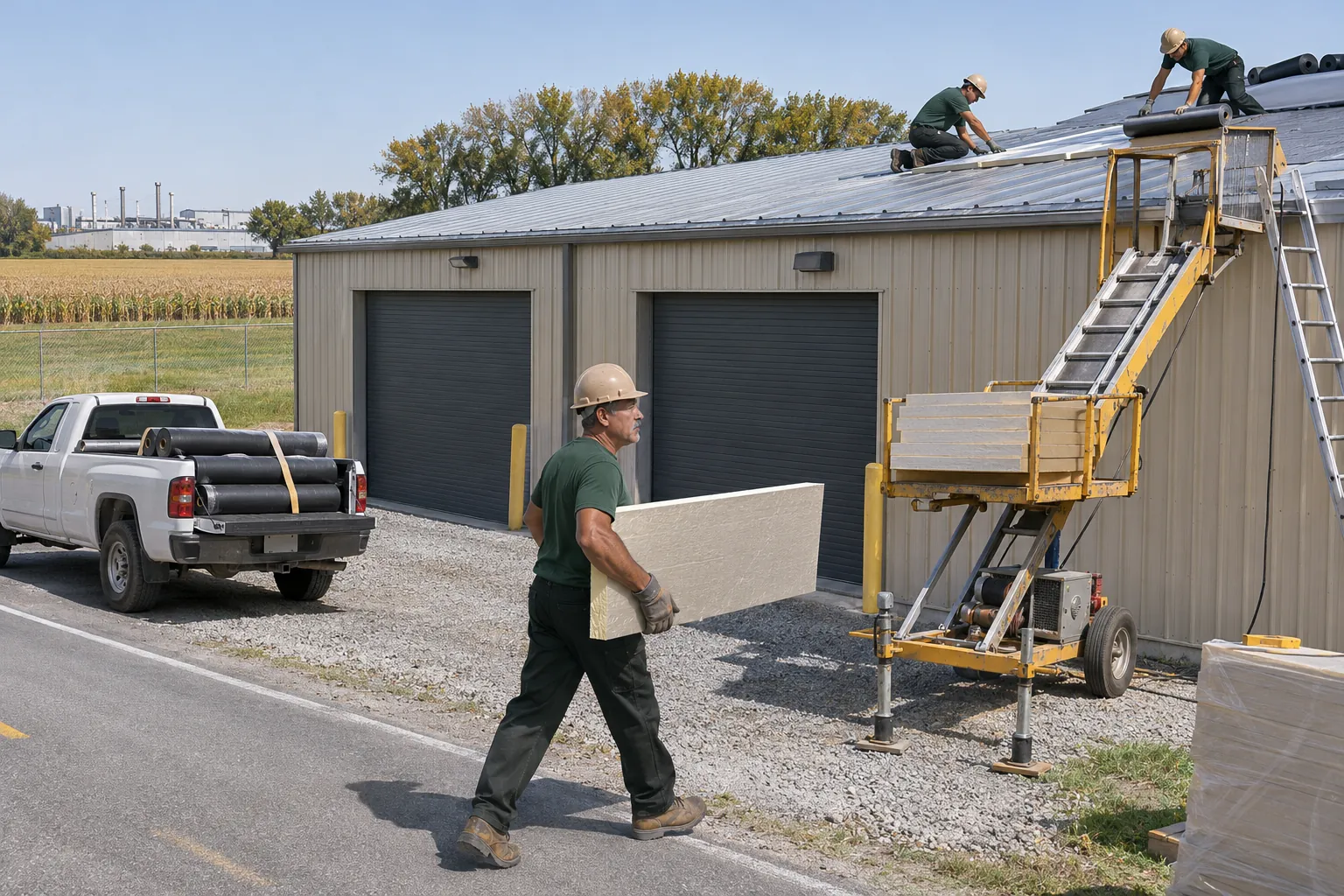
Yes. We handle industrial roofing on plants and manufacturing buildings in Rochester, including roofs with heavy rooftop equipment, exhaust fans, and process penetrations. Each job starts with a roof survey and cores, then a phased plan that keeps production running.
Flashing at every unit, walkway pads on service routes, and drainage at low points are part of every scope.
On plant roofs, price rises with the number of penetrations to flash, curbs that need raising, the amount of wet insulation, roof size, and the system and membrane thickness. Crane lifts, phasing around production, and coordination with mechanical trades also count.
A free survey with cores turns those items into a written price.
Call us or send a message with the plant address and the area that leaks. We cover Rochester from Kokomo and set a survey time with your maintenance lead so we can walk the roof, count penetrations, and take cores.
Every unit, fan, stack, pipe, and drain, plus the deck and insulation under them. A good survey counts penetrations, notes curb heights, marks service routes, and takes cores near equipment where leaks start. The proposal should show those findings, the phasing plan, and how the work fits around production.
Yes. Pads give technicians a durable surface from the hatch to each unit, so boots, tools, and carts stop wearing the field membrane. On roofs with frequent service visits, missing pads are one of the most common reasons a fairly new roof starts leaking around equipment.
Send us the Rochester address and which equipment area leaks, and we will schedule a free survey with cores.