Screws Loosening on Exposed-Fastener Roofs
Panels expand and contract with each season, working screws loose and wearing washers flat. Each loose screw is a small opening along a purlin line, and rain follows it inside.
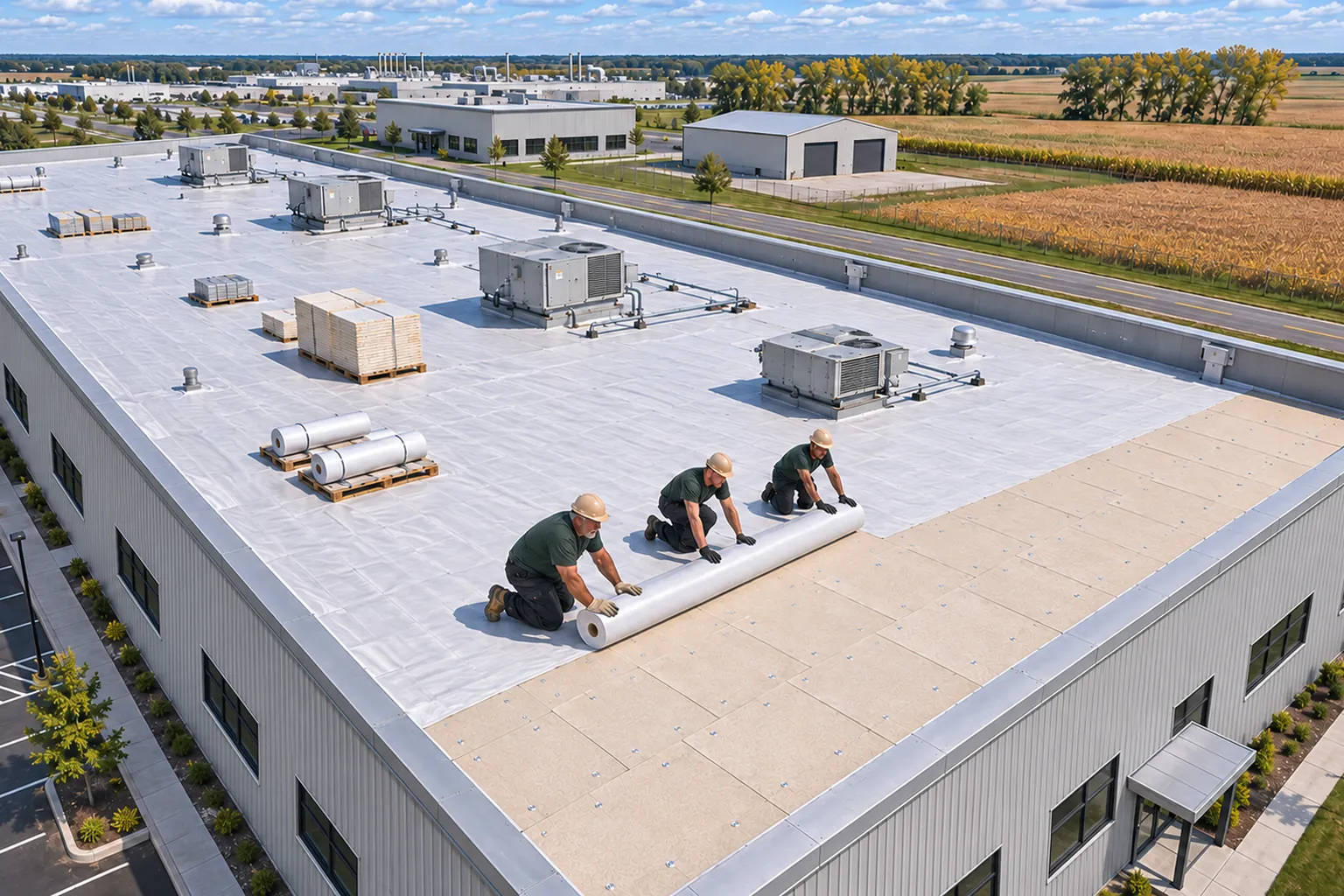
As a Peru commercial roofing contractor, we install metal, TPO, and EPDM roofs on light industrial, storage, and commercial buildings in Peru, matched to each roof's slope.
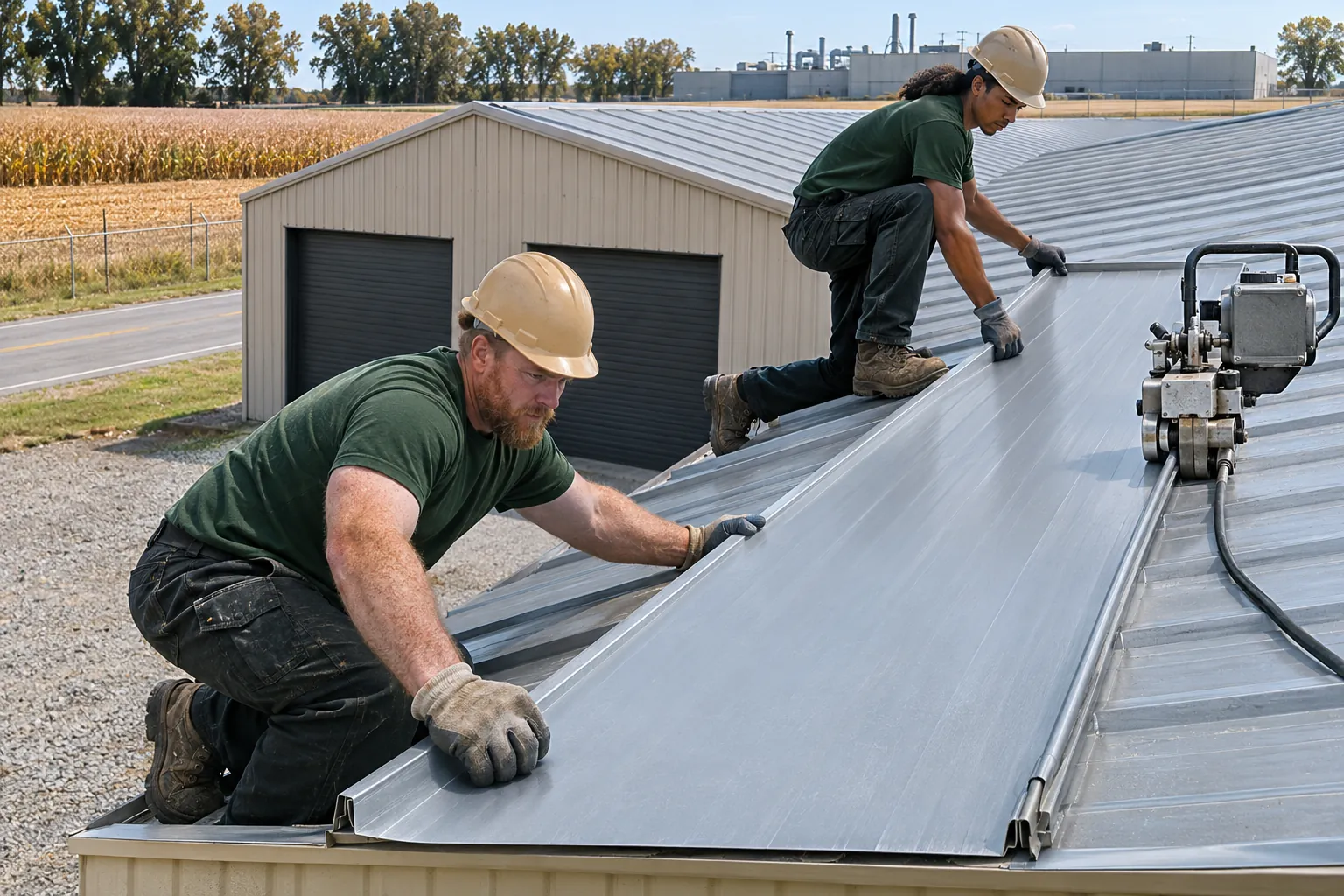
Peru commercial roofing starts with the pitch of the roof. Standing seam metal needs a panel and seam rated for the slope, while flat sections take TPO or EPDM, or a framed retrofit that builds in pitch.
We measure slope at several points, check the purlins or deck below, and note interior condensation before naming a system for the building.
Light industrial and commercial roofs in Peru show wear in a few familiar places. These six lead most owners to call.
Panels expand and contract with each season, working screws loose and wearing washers flat. Each loose screw is a small opening along a purlin line, and rain follows it inside.
End laps and side laps hold water and dirt, and rust starts there first. On low-slope metal, water sits longer at those laps, so rust spreads faster than on steeper roofs.
Additions with flat roofs beside metal buildings collect water where they meet the main wall. That joint and the membrane near it wear out well before the rest of the building.
Shops and storage buildings without a vapor retarder drip when warm air meets cold steel. Owners often mistake it for a leak until the roof is checked from inside.
Wind works trim and closures loose at ridges and rakes, opening the panel ribs to birds and blowing snow. Loose trim also lets panels flutter and pull their fasteners.
Spring hail dents panels and can crack paint at the seams. Dated photos after a storm separate cosmetic dents from seams that need repair or new metal.
Metal and flat roofs in Peru take different paths to a dry building. The table shows where each job usually fits.
| What You See | Fastener And Lap Repair | Framed Retrofit | Tear-Off And New Roof | What Decides It |
|---|---|---|---|---|
| Loose screws on rust-free panels | Usually fits | Rarely | Rarely | Panels and purlins hold firm. |
| Rust through panels at the eaves | Rarely | Sometimes | Usually fits | How far the rust runs upslope. |
| Flat addition that ponds | Rarely | Usually fits | Usually fits | Structure for framing or tapered board. |
| Low-slope metal with water held at laps | Sometimes | Usually fits | Sometimes | Slope versus the panel's minimum. |
| Condensation dripping in a shop | Sometimes | Sometimes | Usually fits | Vapor retarder and insulation needs. |
| Spring hail dents with tight seams | Usually fits | Rarely | Rarely | Photos along every seam line. |
Three systems cover most of the other buildings we roof in Peru.
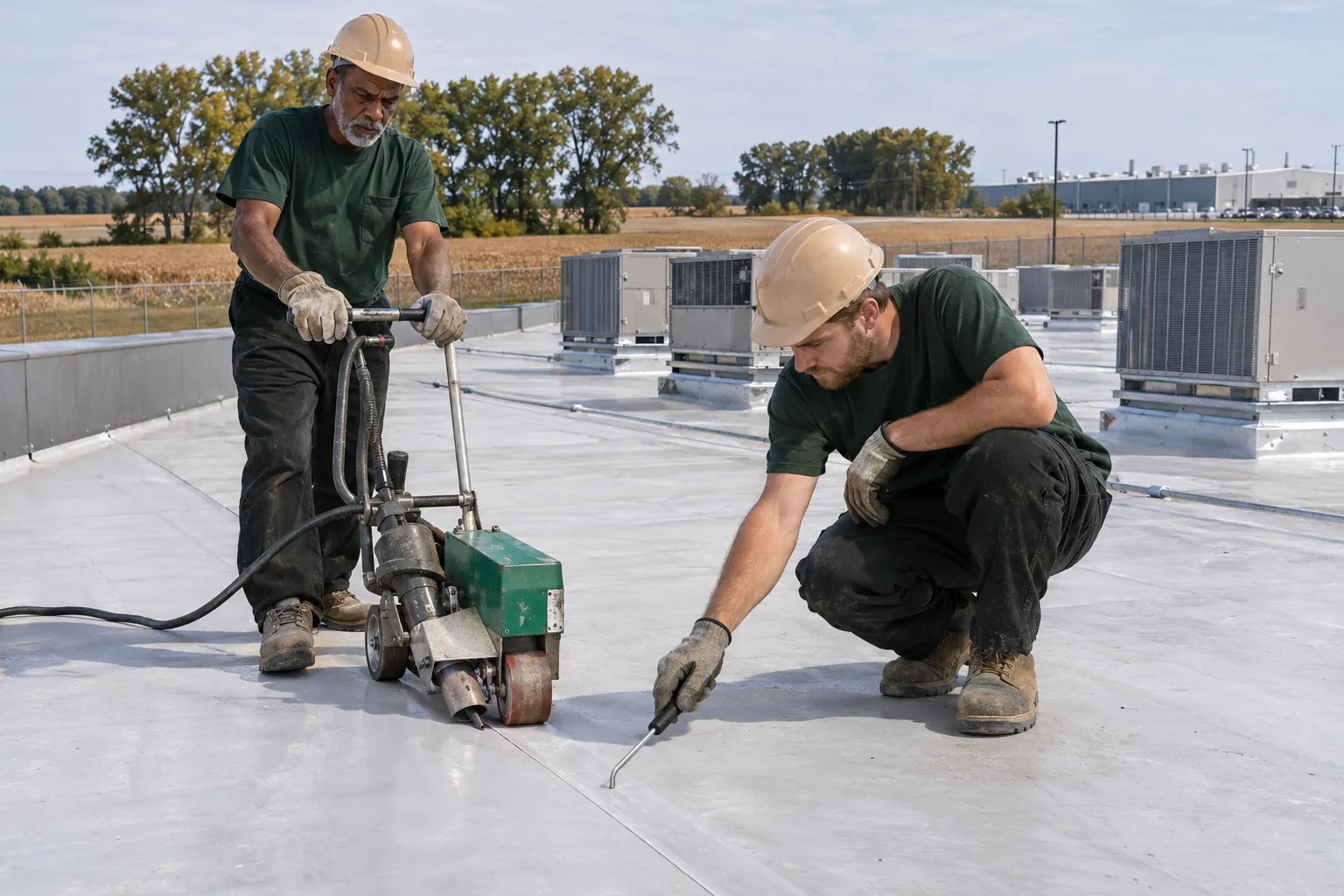
White TPO for flat sections, additions, and low-slope storefront roofs in Peru that need welded seams and a reflective surface.
Kokomo TPO Roofing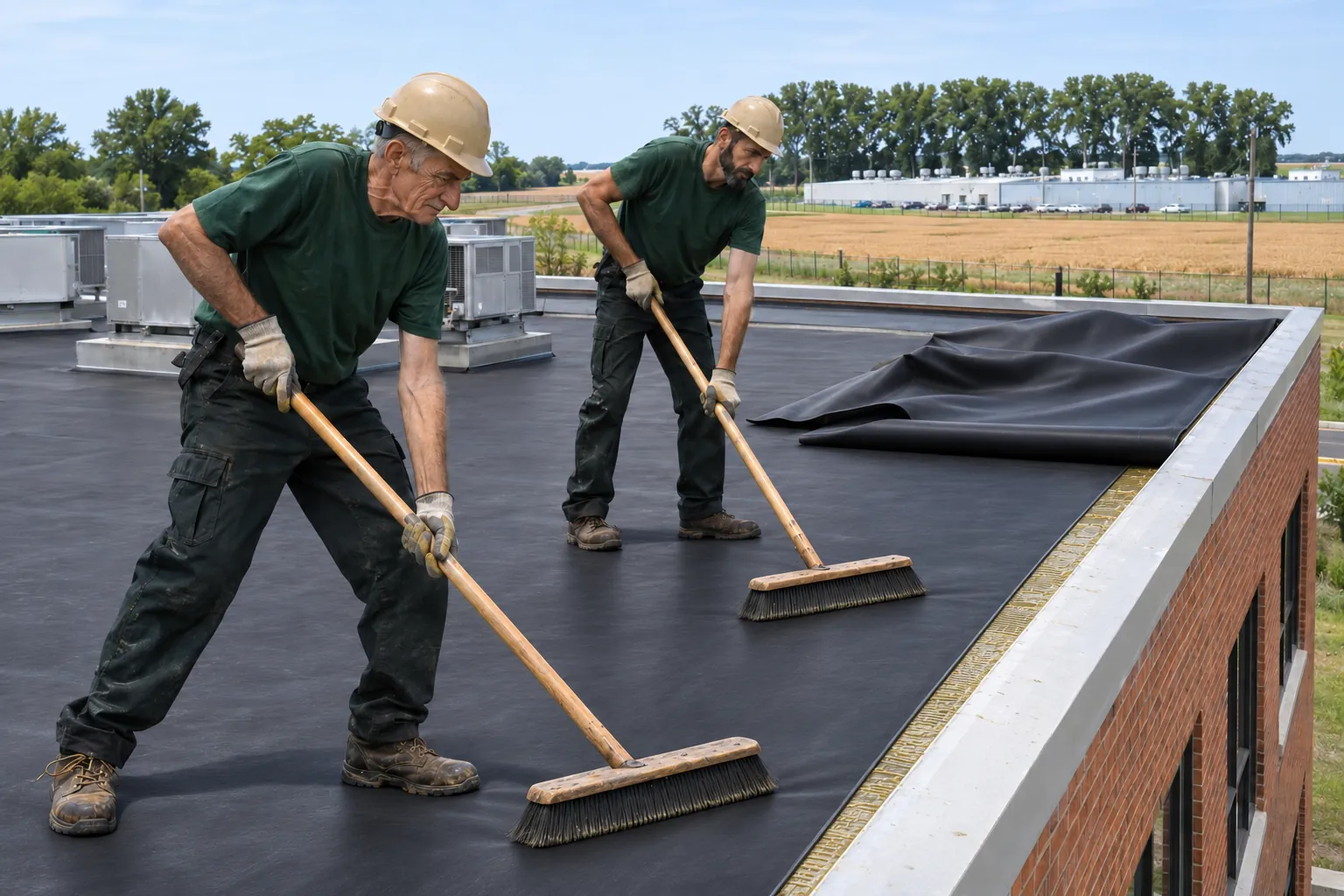
EPDM rubber for flat Peru roofs with simple layouts, adhered over new insulation and flashed at walls, curbs, and drains.
Kokomo EPDM Roofing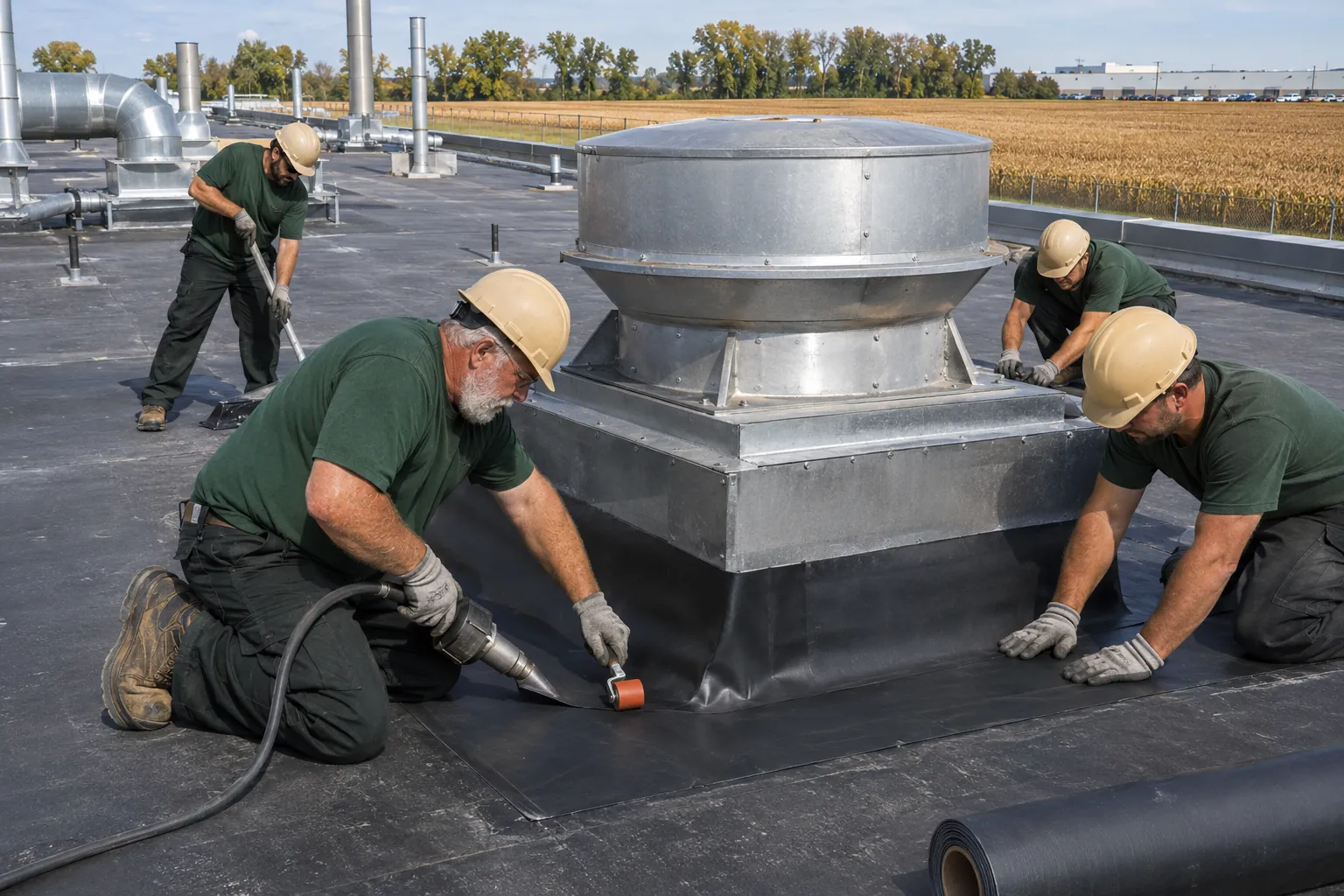
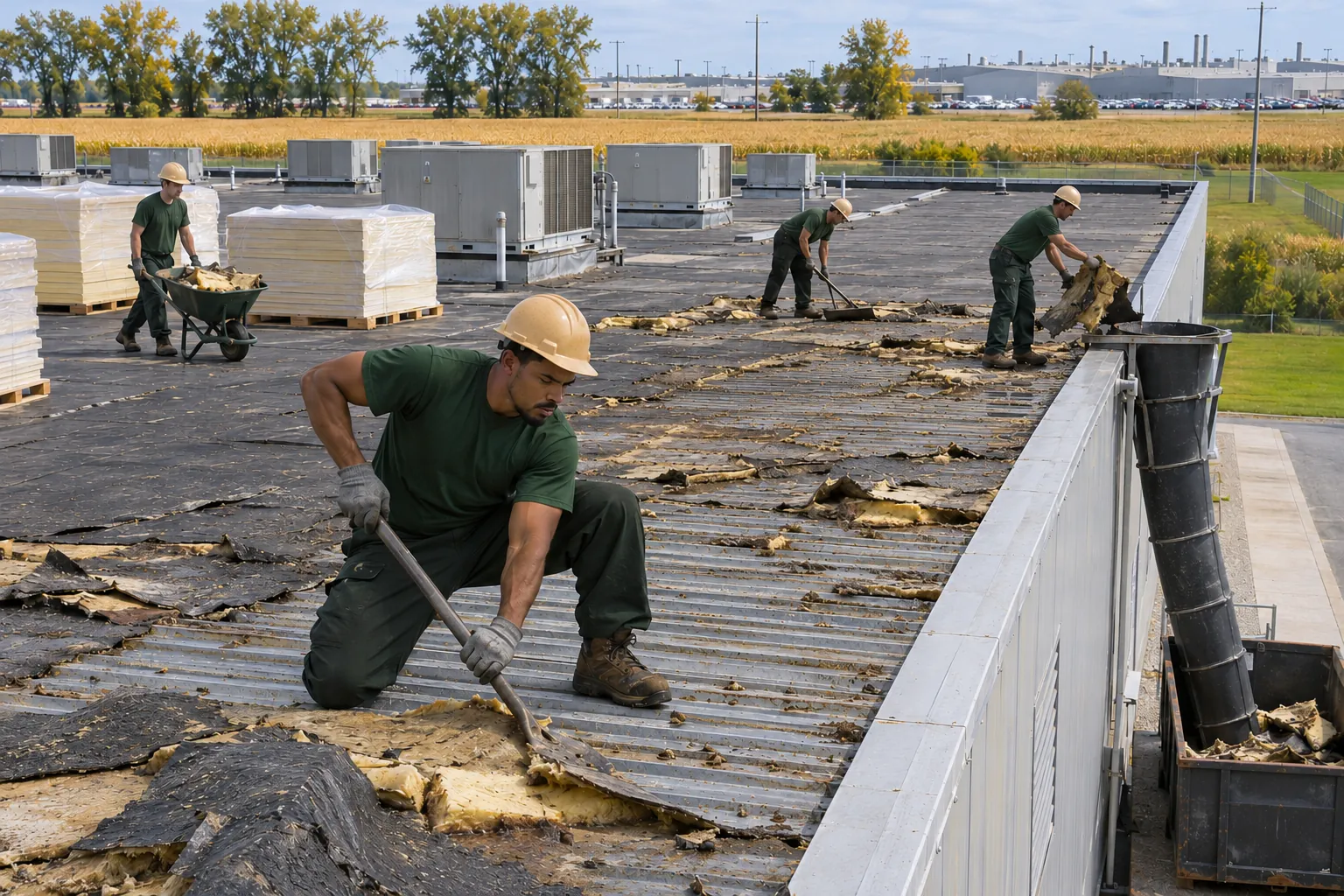
Phased roof work for Peru plants and light industrial buildings with rooftop units, exhaust fans, and process penetrations.
Kokomo Industrial RoofingWater dripping from metal panels or a flat addition in Peru right now? Call us and we will start with the laps and joints above the drip.
Call UsPlanning new metal or a retrofit for a Peru building? Book a free inspection with slope measurements and a written scope.
Schedule Free InspectionMetal and membrane work in Peru follows the same four stages, with the slope check up front.
We measure pitch, check laps, fasteners, and trim, and look at the purlins or deck from inside. Condensation marks get noted so the new roof handles moisture as well.
The slope readings pick the system: standing seam where the pitch allows, exposed fastener for simpler buildings, or membrane and framing on flat sections.
Old metal or membrane comes off in sections, damaged purlins or deck are repaired, and insulation or a vapor retarder goes down before the new roof.
Ridge caps, rake and eave trim, and closures seal the panel ends, and flashings finish the flat sections. A final walk reviews each seam line with you.
From Kokomo, we also take commercial roofing jobs in the four towns below.
Your building outside these towns? Call us or send us a message.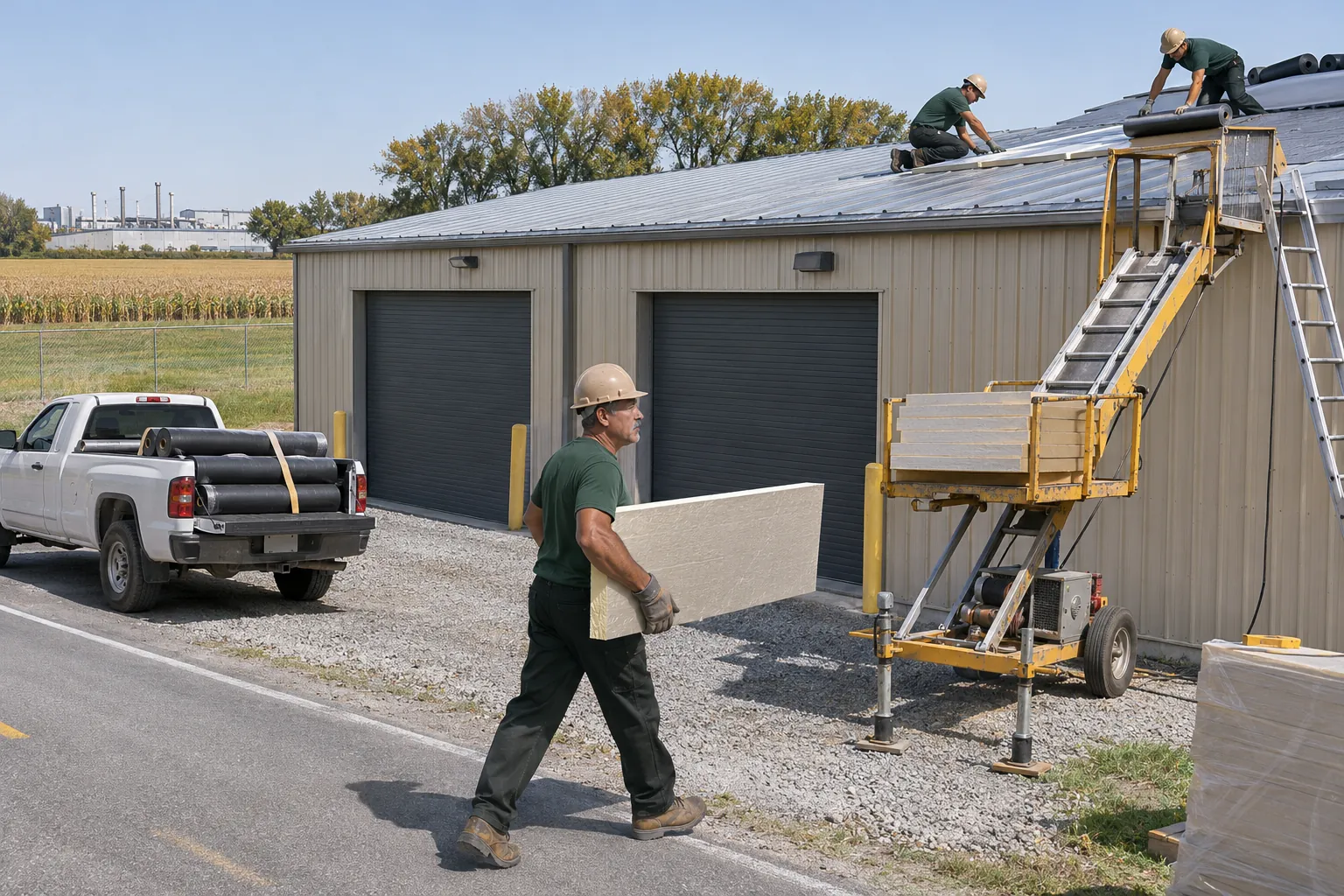
Yes, where the slope allows it. Standing seam metal fits Peru commercial and light industrial buildings that want hidden fasteners and panels that move with temperature swings. Low-slope roofs need a panel and seam rated for that pitch, and flat roofs can take framing that adds slope first.
A look at the structure and pitch tells which profile fits.
Cost follows the roof size, the system chosen, panel gauge or membrane thickness, whether old roofing comes off or stays under a retrofit, insulation, trim and flashing details, and the number of penetrations. Framing to add slope and lift access add to it.
A free inspection measures the roof and prices it in writing.
Start by calling us with the building address and what you are seeing, such as drips, rust, or ponding. We cover Peru from Kokomo and set a time to walk the roof, measure slope, and look inside for condensation before writing up options.
Look for a contractor who measures slope, checks the structure from inside, and names the panel profile, gauge, seam type, insulation, and trim details in writing. They should explain how flat sections and joints with additions are handled and who checks permit needs.
Photos of the problem spots should come with the proposal.
Warm, humid air inside a shop or storage building condenses on cold steel panels and drips, which looks like a leak. The fix is a vapor retarder or insulation under the panels, plus ventilation. We check for condensation patterns during the inspection so a new roof solves the right problem.
Tell us about the Peru building, its slope, and where water shows, and we will book a free inspection.