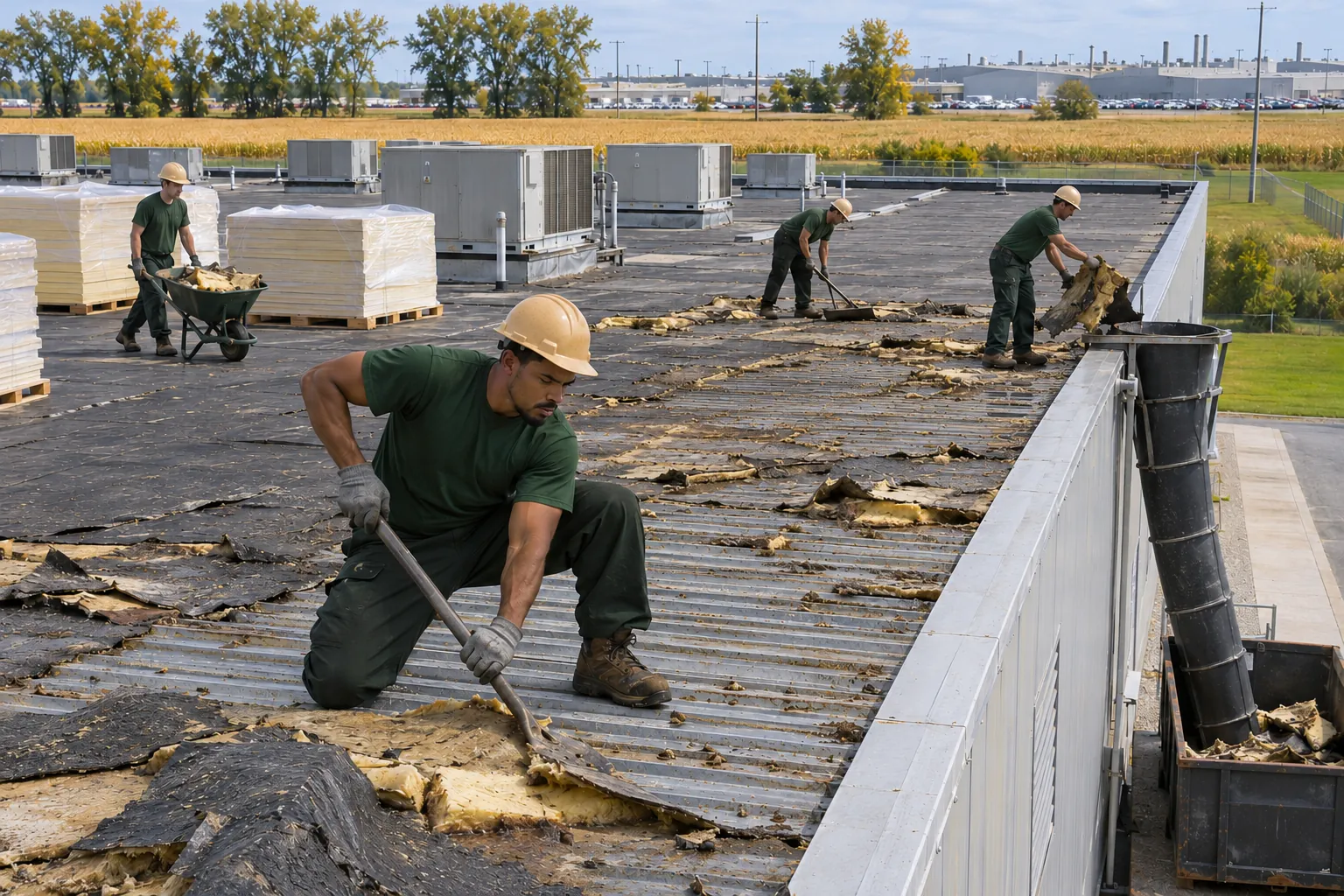
Crew tearing an old roof down to the deck on a commercial building
Systems4 Roof Types
Our Services

Commercial Roofing Services in Kokomo

Four Roof Systems and Full Replacement for Commercial Buildings

Our commercial roofing services in Kokomo cover TPO, EPDM, industrial, and metal roofs, plus full roof replacement once an old roof has run its course.

PlusFull Replacement
Roof Systems

Commercial Roofing Services in Kokomo by Roof System

Each of our commercial roofing services in Kokomo starts with a roof walk and cores. These cards show where each system fits and what goes into it.

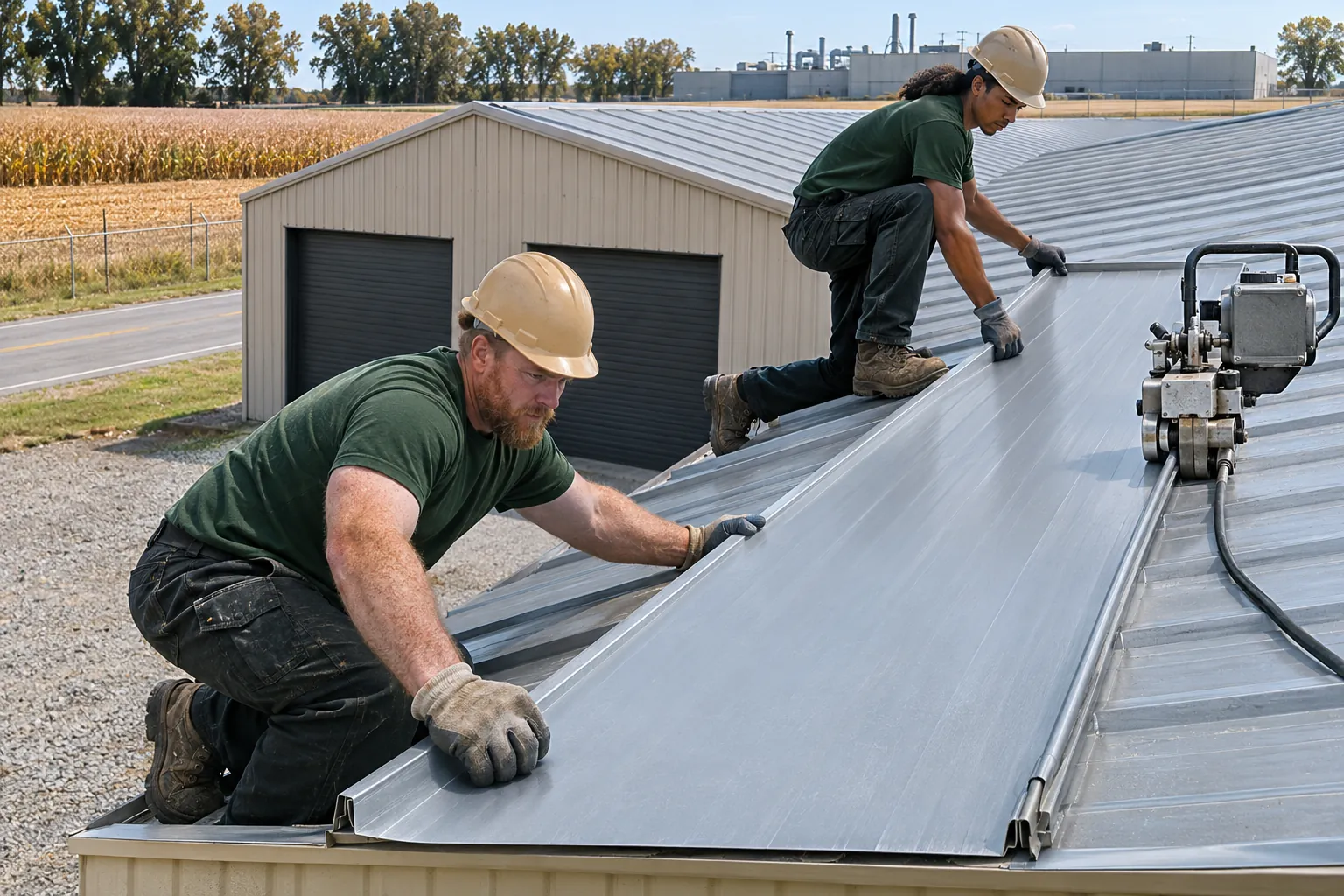
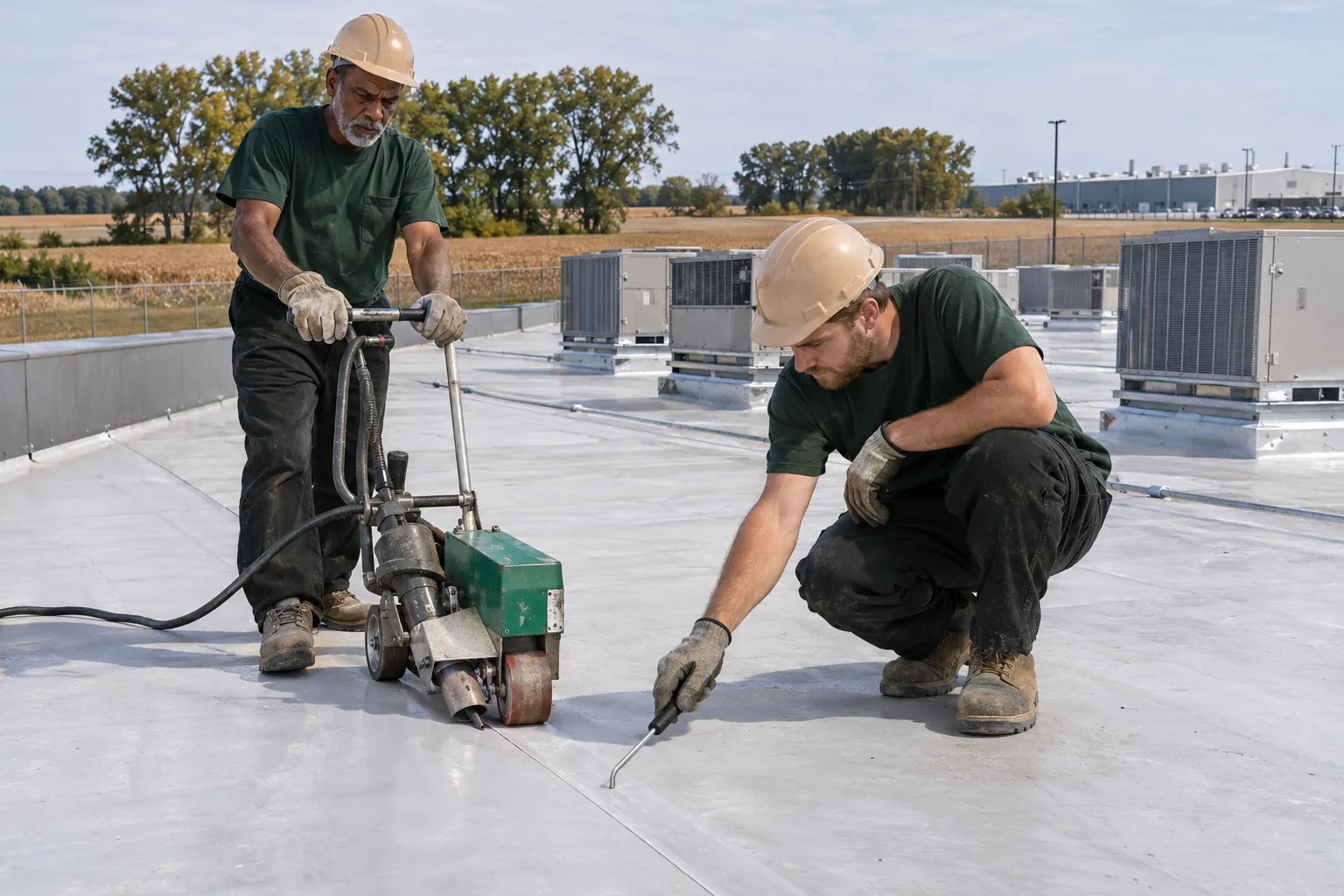
Roofer running a hot-air welder along a TPO roof seam

TPO Roofing

White, hot-air welded TPO membrane over new insulation for warehouses, offices, retail centers, and plant roofs with lots of equipment, mechanically fastened or fully adhered in 60 or 80 mil sheets.

Best fit: large low-slope roofs

Kokomo TPO Roofing
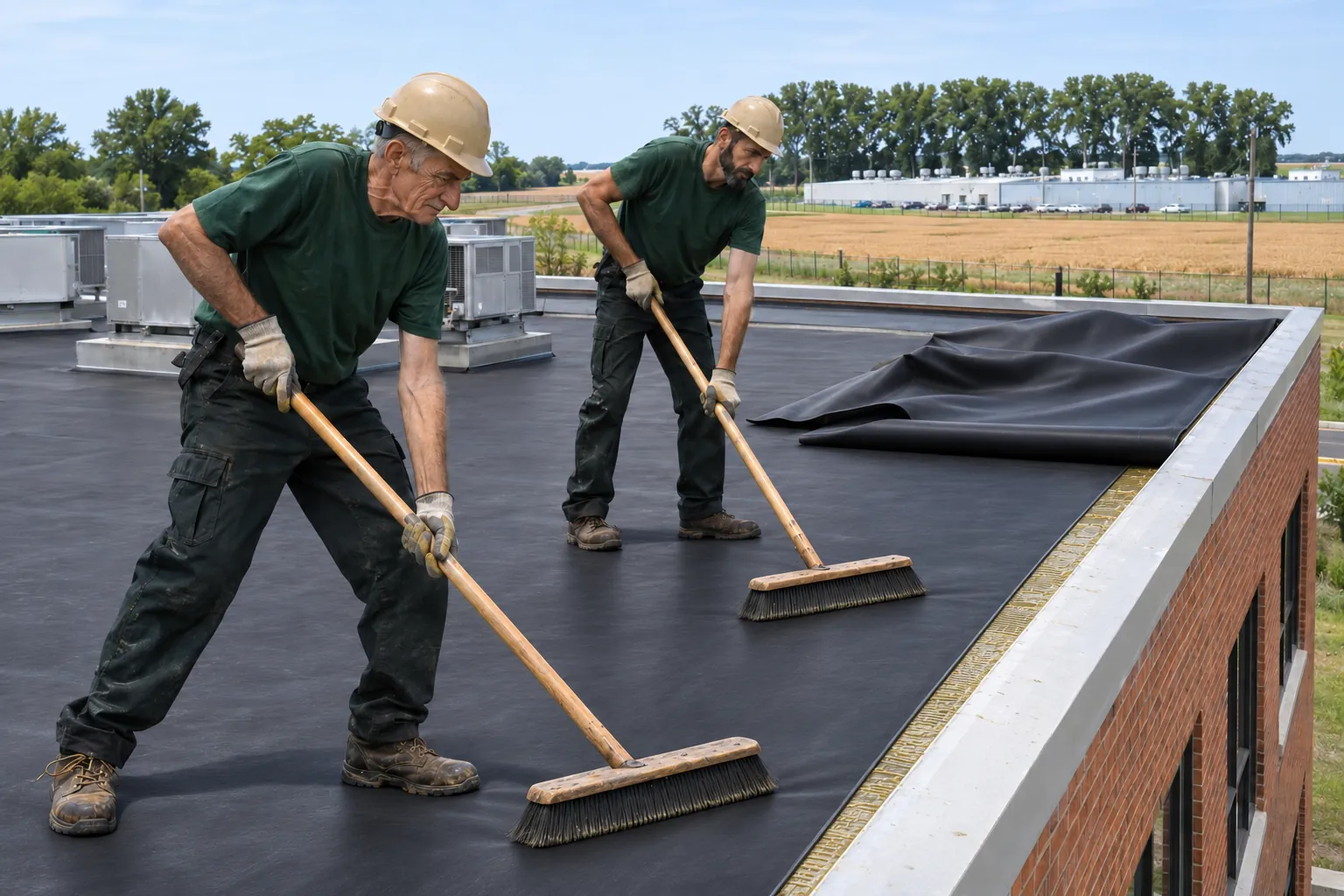
Roofers laying black EPDM rubber membrane on a flat commercial roof

EPDM Roofing

Black EPDM rubber that stays flexible through winter, adhered, fastened, or ballasted, with primed and taped laps and new flashing at walls, curbs, and drains.

Best fit: flat roofs with simple layouts

Kokomo EPDM Roofing
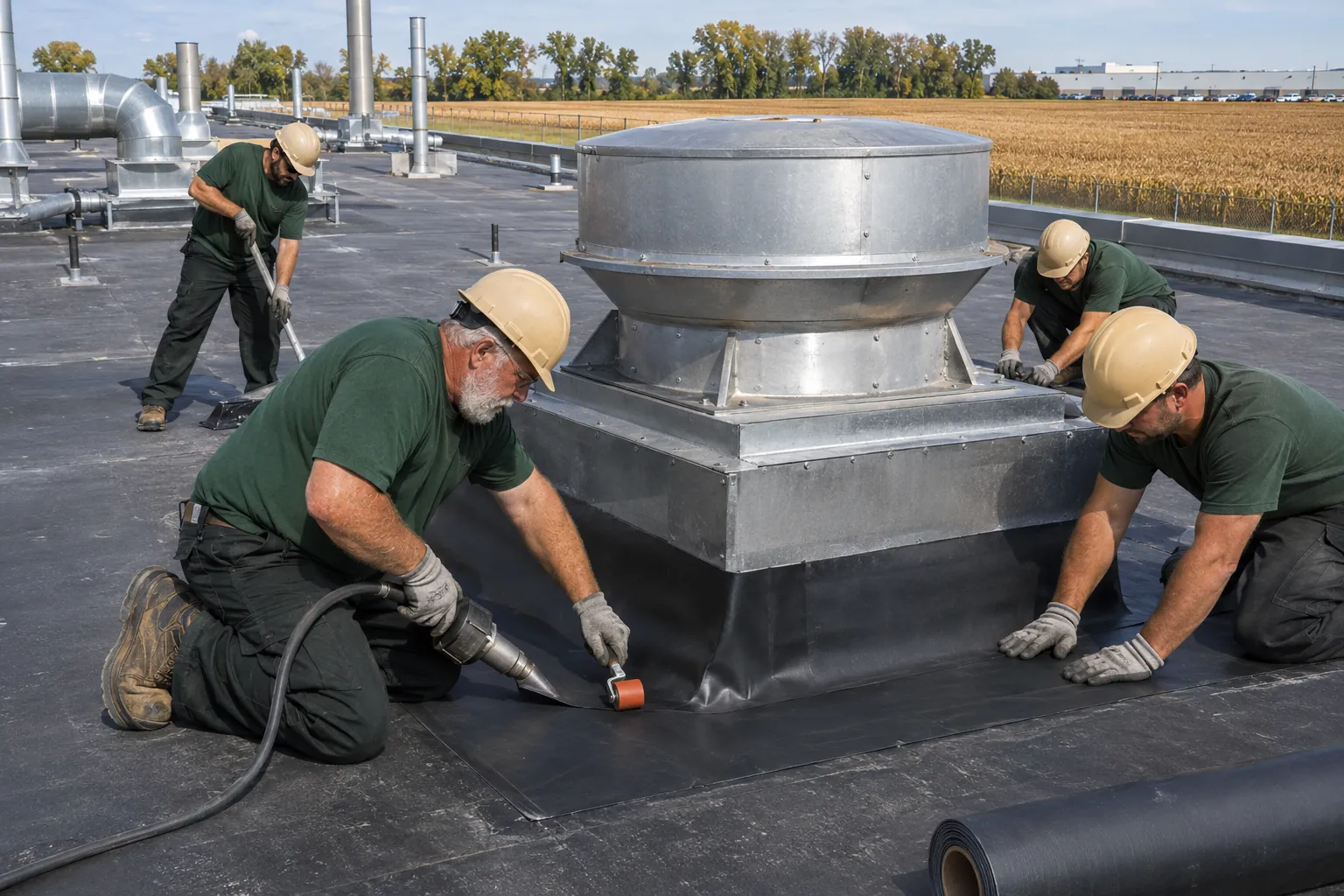
Roofer flashing a rooftop equipment curb on an industrial roof

Industrial Roofing

Phased replacement of plant and mill roofs, with a penetration survey, raised curbs where needed, flashing built for heat and exhaust, and walkway pads on service paths.

Best fit: plants, mills, and process buildings

Kokomo Industrial Roofing
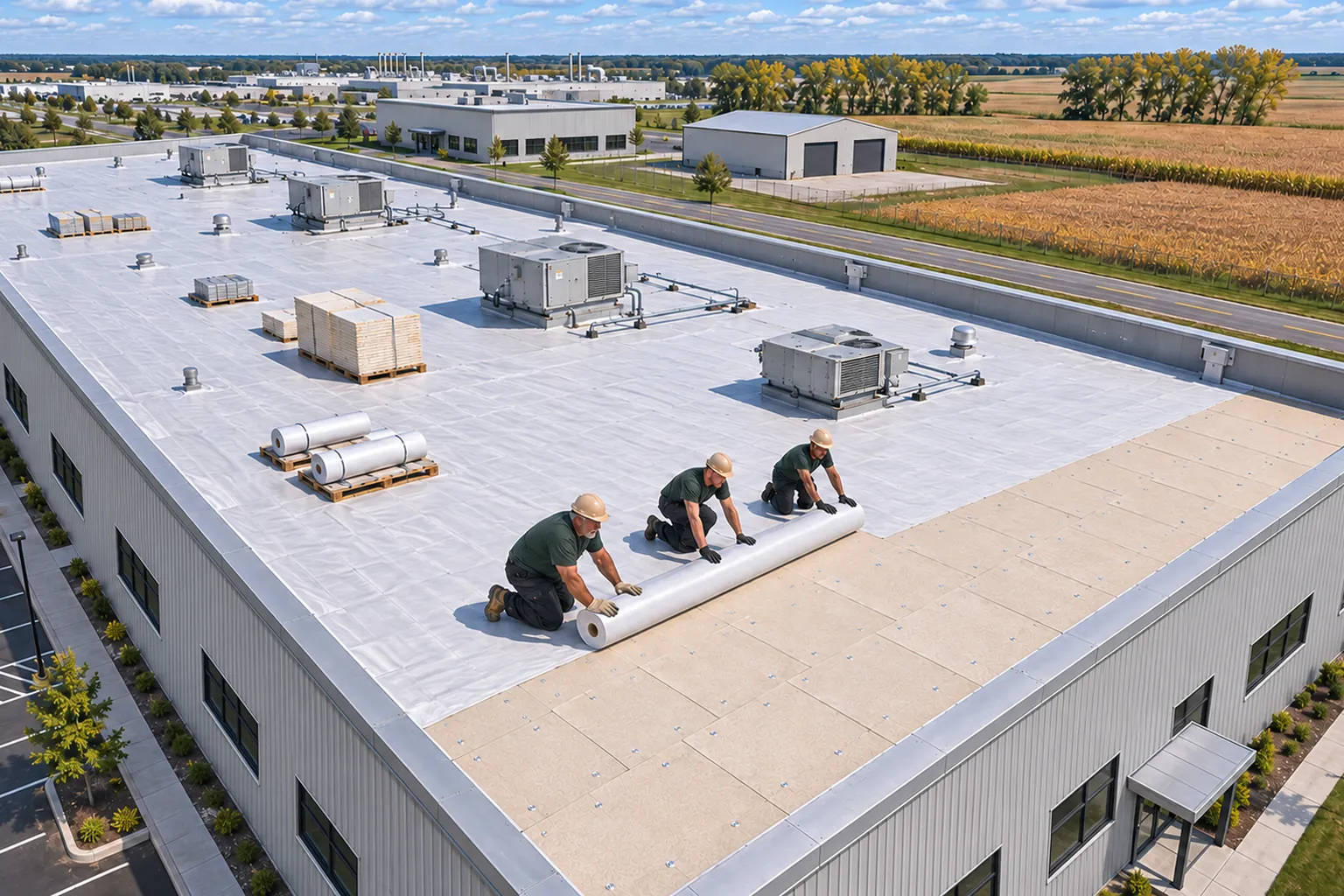
Roofing crew rolling out white TPO membrane on a flat commercial roof in Kokomo
Full Replacement

Commercial Roof Replacement in Kokomo

Full roof replacement sits alongside the four systems because it is the step that comes once repairs stop holding. We tear the old roof off to the deck in sections, repair the deck, and install new insulation with TPO, EPDM, or metal on top.

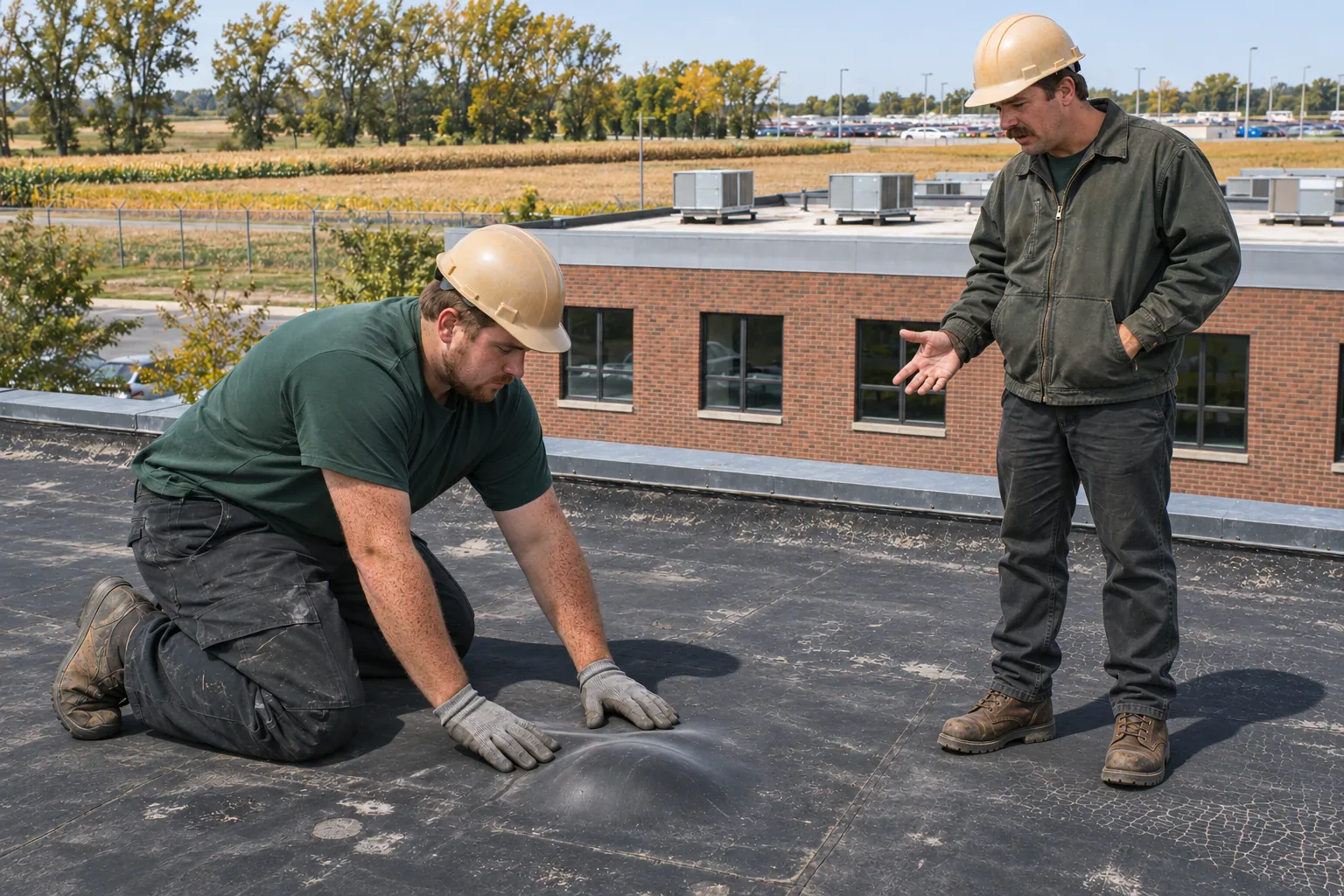
Replacement makes sense when cores find wet insulation over large areas, seams fail across the whole roof, or two layers already sit on the deck.

  • Cores decide repair or replacement
  • Tear-off to the deck in sections
  • New system, insulation, and flashing
  • Phasing planned around the building
Which System Fits

Which System Fits Which Roof

Building use, roof slope, and what sits on the roof narrow the choice quickly. The rows below show where each system usually lands.

Your BuildingTPOEPDMIndustrial ScopeMetalWhy
Warehouse with long, open low-slope runsUsually fitsUsually fitsRarelyRarelyWide sheets cover big areas with few laps.
Plant roof crowded with units and exhaustUsually fitsSometimesUsually fitsRarelyEvery penetration needs its own flashing plan.
Mill building with a sloped steel roofRarelyRarelyUsually fitsUsually fitsPanels span purlins and handle heat below.
Office or store wanting a cool white roofUsually fitsRarelyRarelyRarelyWhite TPO reflects summer sun.
Flat roof that needs added slope to drainSometimesSometimesRarelyUsually fitsFraming or tapered board builds the pitch.
Farm shop or storage buildingRarelyRarelyRarelyUsually fitsMetal spans wide framing and sheds snow.
Two Ways To Start

Need a Repair Now or a New Roof Later?

Leaking Now?

Active leak somewhere in the building today? Call us and describe where water shows, and we will set the visit around it.

Call Us

Planning A New Roof?

Planning a new roof for next season? Book a free inspection with cores and a written scope for each system that fits.

Schedule Your Free Inspection
How The Work Runs

One Process for Every Roof System We Install

TPO, EPDM, industrial, and metal jobs all follow the same four stages, adjusted to the system and the building.

Stage 1

Inspect Your Roof

A full roof walk, cores at stains and soft spots, and a count of drains, curbs, and edges give us the facts for a scope. Photos go with it, so you see what we saw.

  • Cores at stains and soft spots
  • Photos with every scope
Stage 2

Write A Scope You Can Compare

The scope names the system, membrane thickness or panel gauge, insulation, cover board, flashing details, phasing, and debris handling, so bids line up item by item.

  • Every item measured and named
  • Price tied to the scope
Stage 3

Build The Roof In Sections

Crews tear off, repair the deck, and install each section in one day, sealing it watertight before leaving. Seams are welded, taped, or mechanically seamed as the system requires.

  • One section per day
  • Seams closed every evening
Stage 4

Close Out And Hand Over

Flashing is probed, walkway pads are placed, drains are cleared, and debris is gone. You get a final walk and care notes for the roof system installed.

  • Final walk with you
  • Pads on service paths
Roofer walking a commercial roof with a building owner
Questions

Questions About Commercial Roofing Services in Kokomo

Which Commercial Roofing Service Fits My Building?

Start with the building. Large low-slope warehouses and offices usually take TPO, flat roofs with simple layouts often take EPDM, plants and mills need an industrial scope around their equipment, and steel buildings or roofs that need pitch take metal. The roof walk confirms the fit, and the scope explains why.

What Does Commercial Roof Replacement in Kokomo Include?

A replacement covers tear-off to the deck, deck repair where needed, new insulation and cover board, the new membrane or panels, and new flashing at every curb, drain, wall, and edge. It also covers debris removal, phasing around your operations, and a final walk.

The written scope lists each item so nothing is assumed.

Can Different Roof Systems Go on One Building?

Yes. Plenty of buildings carry a flat TPO or EPDM section beside a metal-roofed wing, or a plant roof next to an office roof. Each section gets the system that fits it, and the joints between them get flashing details planned for both materials.

Do You Install Roofs on New Buildings and Additions Too?

Yes. New commercial buildings and additions take the same systems we use on replacements. We work from the building drawings to set insulation, slope, and flashing details, and we coordinate the roof schedule with the general contractor so the building is dried in on time.

How Far Ahead Should a Roof Replacement Be Planned?

For a planned replacement, an inspection a season ahead leaves time for the scope, budget approval, crane bookings, and scheduling around operations. Spring through fall is the main installation window here, since adhesives, welds, and sealants set most reliably in milder weather.

Get Started

Talk to Us About Commercial Roofing Services in Kokomo

Tell us which building and what the roof is doing, and we will match it to the right system after a free inspection.

Call Us (574) 384-0722