Welds Opening Along Old Laps
Seams that were welded too cold or too fast can let go years later. Probing finds the gaps, and a roof with open welds across many runs is often ready for a new TPO sheet.
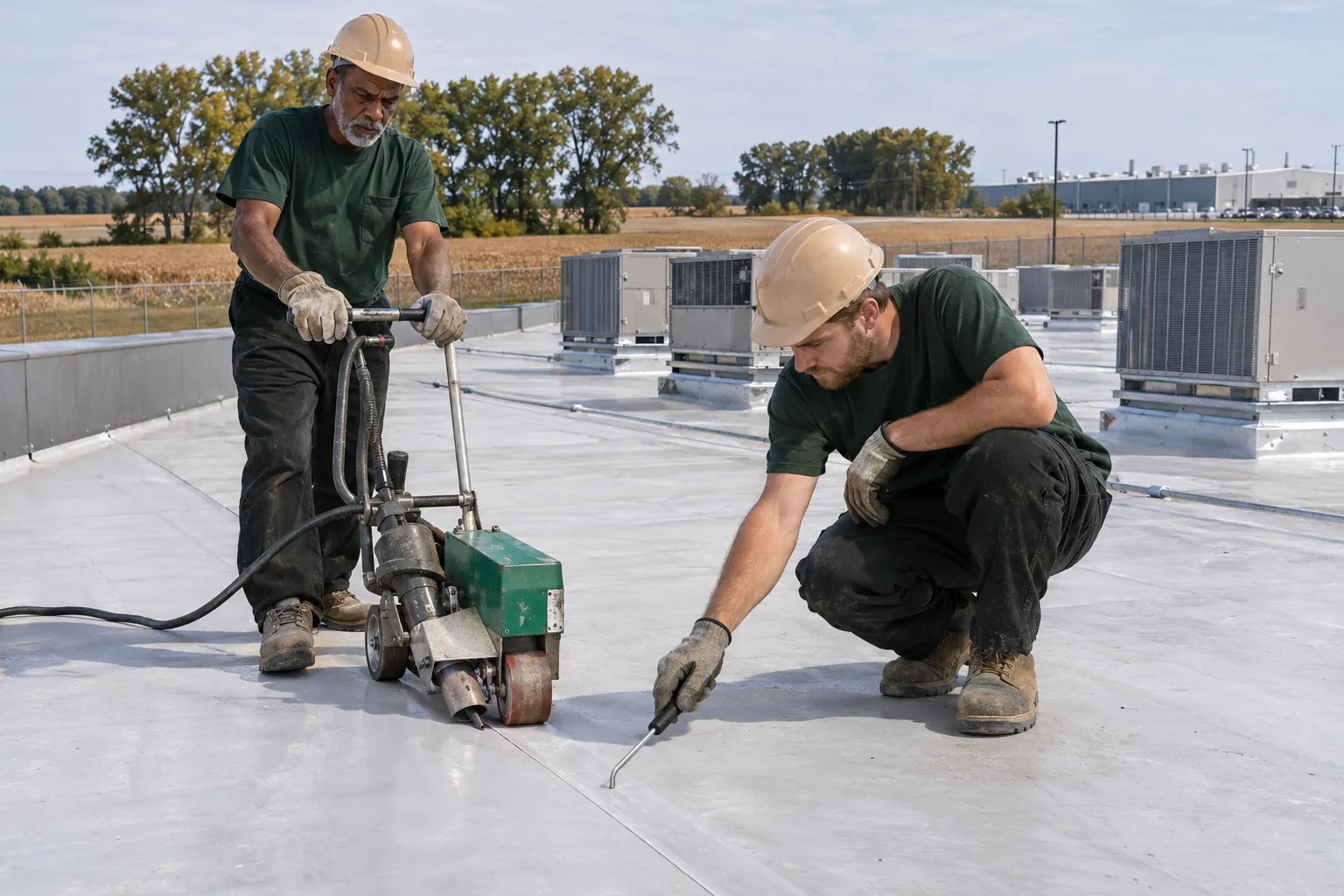
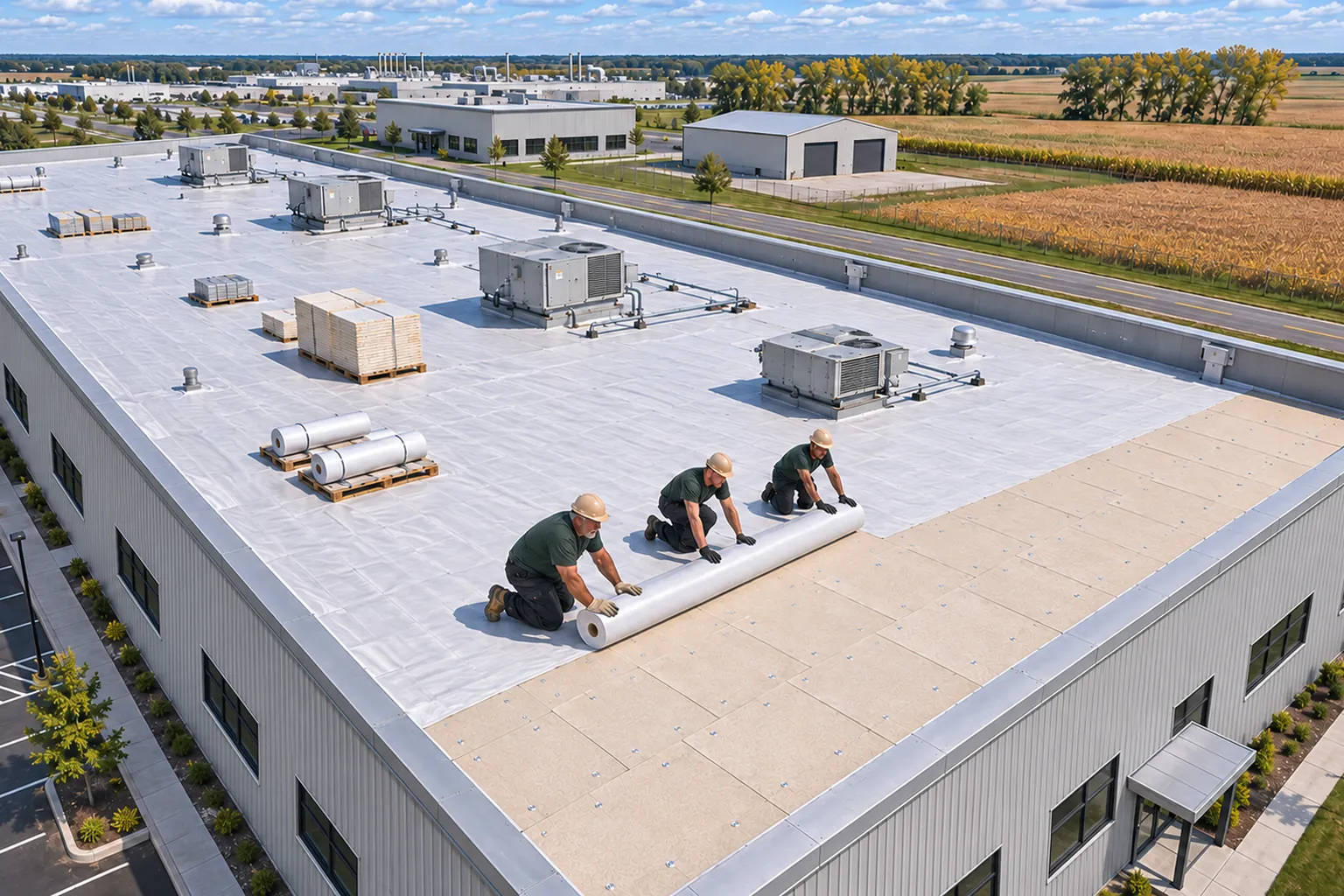
As a Kokomo TPO roofing contractor, we install white TPO membrane over new insulation on warehouses, plants, offices, and retail buildings, with every seam heat-welded.
Kokomo TPO roofing fits most low-slope commercial roofs, and a few conditions point to a repair first or to another system. Find your roof in the rows below.
| What You See | Install TPO Now | Repair First | Another System | What We Check |
|---|---|---|---|---|
| Wide low-slope warehouse roof with dry insulation | Usually fits | Rarely | Rarely | Cores, drains, and edge heights. |
| Older TPO with a few open welds | Rarely | Usually fits | Rarely | Whether the old sheet still takes a weld. |
| Roof crowded with curbs and pipe supports | Usually fits | Sometimes | Rarely | Curb heights and room for flashing. |
| Roof under heavy grease or oil exhaust | Sometimes | Rarely | Sometimes | What vents land on the membrane. |
| Steel building with a pitched panel roof | Rarely | Rarely | Usually fits | Slope and purlin spacing. |
| Two old roof layers already on the deck | Usually fits | Rarely | Rarely | Layer count and deck condition after tear-off. |
These six conditions bring most building owners to a TPO replacement conversation. Each one is visible on a roof walk or in a core sample.
Seams that were welded too cold or too fast can let go years later. Probing finds the gaps, and a roof with open welds across many runs is often ready for a new TPO sheet.
Fastened membranes take the most wind load at perimeters and corners. Loose plates, flutter, and torn sheet in those zones show the attachment needs rework, and a new TPO roof answers with denser fastening there.
Dropped tools and heavy service traffic punch holes near curbs and fans. A TPO replacement adds walkway pads on the service paths and welded flashing wrapped up each curb to a set height.
Warehouse roofs with long, flat runs collect water where the deck sags between joists or drains sit high. Tapered insulation under new TPO moves that water toward the drains before it sits on the seams.
Weathered TPO turns chalky and stiff, and patches stop bonding to it. Once test welds fail across the roof, repairs stop holding, and a recover or tear-off with new membrane becomes the plan.
Black or gray roofs soak up summer sun over the offices and stores below. White TPO keeps the roof surface cooler on hot afternoons, and the gain inside comes down to insulation and what runs in the building.
A TPO roof is built from a few choices. The roof walk and the way the building is used decide each one.
Plates and screws hold the membrane to the deck along each seam, and the next sheet's weld covers them. This attachment goes down quickly on steel decks over large warehouse roofs.
Bonding adhesive glues the sheet to the cover board across its whole surface. The membrane lies flat, flutters less in wind, and works well on roofs with many penetrations or a visible roof line.
Thicker sheets, such as 60 and 80 mil, add puncture resistance on roofs with heavy service traffic. We match thickness to foot traffic, equipment, and budget in the written scope.
Polyiso boards set the roof's insulation value, tapered boards build slope toward drains, and a cover board adds a firm surface under the membrane that stands up to hail and boots.
Some TPO roofs need a few welds and flashings, and some need a new sheet. Here is where repair, a recover, and a full replacement usually land.
| What You See | Weld-On Repair | Recover With TPO | Tear-Off And New TPO | What Decides It |
|---|---|---|---|---|
| Two or three open welds on a dry roof | Usually fits | Rarely | Rarely | Test welds on the old sheet still hold. |
| Brittle sheet that rejects patches | Rarely | Usually fits | Usually fits | Dry insulation below allows a recover. |
| Wet insulation found in the cores | Rarely | Rarely | Usually fits | Wet board has to come out first. |
| Single dry layer under worn membrane | Rarely | Usually fits | Sometimes | Cover board and new TPO go over it. |
| Flashing failing at many curbs | Sometimes | Sometimes | Usually fits | How much of the roof the curbs take up. |
| Punctures along one service path | Usually fits | Rarely | Rarely | Patches plus walkway pads end the wear. |
Water dripping near a curb or along a seam right now? Call us, describe where it shows, and we will plan the first visit around it.
Call UsWeighing a new TPO roof for a warehouse or plant? Book a free inspection with cores, measurements, and a written TPO scope.
Schedule Free InspectionA TPO replacement moves through four stages, and seam welding gets its own checks every day. Pick a stage for the details.
Our roof walk covers every seam, curb, drain, and edge, with cores where the deck feels soft. The findings set the scope: tear-off or recover, insulation, membrane thickness, and the attachment method.
Old roofing comes off one section at a time, wet insulation goes out with it, and damaged deck is repaired. New insulation and cover board are fastened down before any membrane is rolled out.
Before work starts each morning, test welds set the welder's heat and speed for that day's weather. Sheets are rolled out, fastened or adhered, and every lap is hot-air welded into one continuous membrane.
Curbs, drains, and edges get welded TPO flashing and metal trim. Each seam is probed with a pick, walkway pads go down along service paths, and you walk the finished roof with us.
TPO is one of four systems we put on commercial roofs here. These three cover buildings where another system fits better.
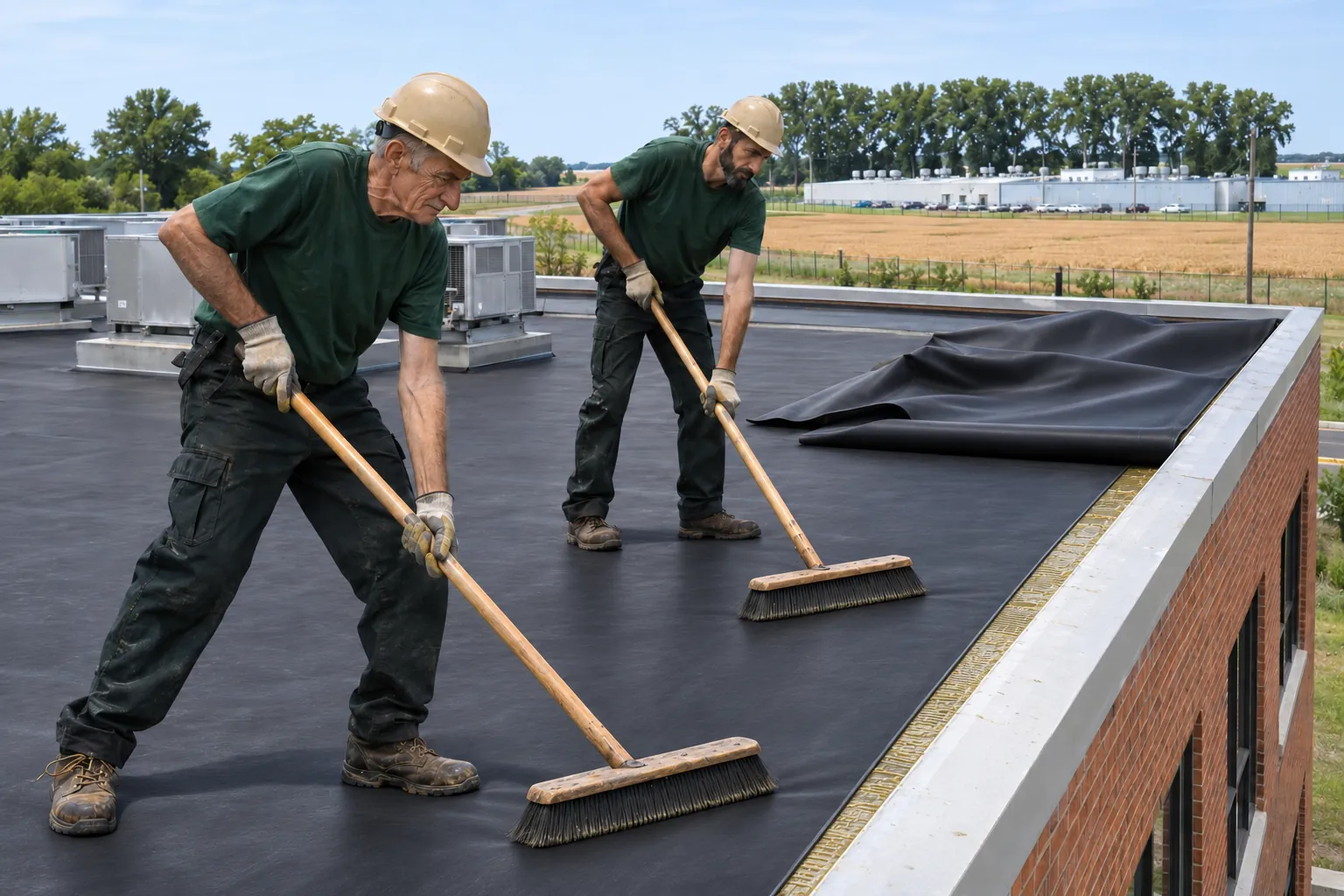
Rubber EPDM membrane for flat roofs that see hard winters and few penetrations, glued down or fastened over new insulation with taped seams.
Kokomo EPDM Roofing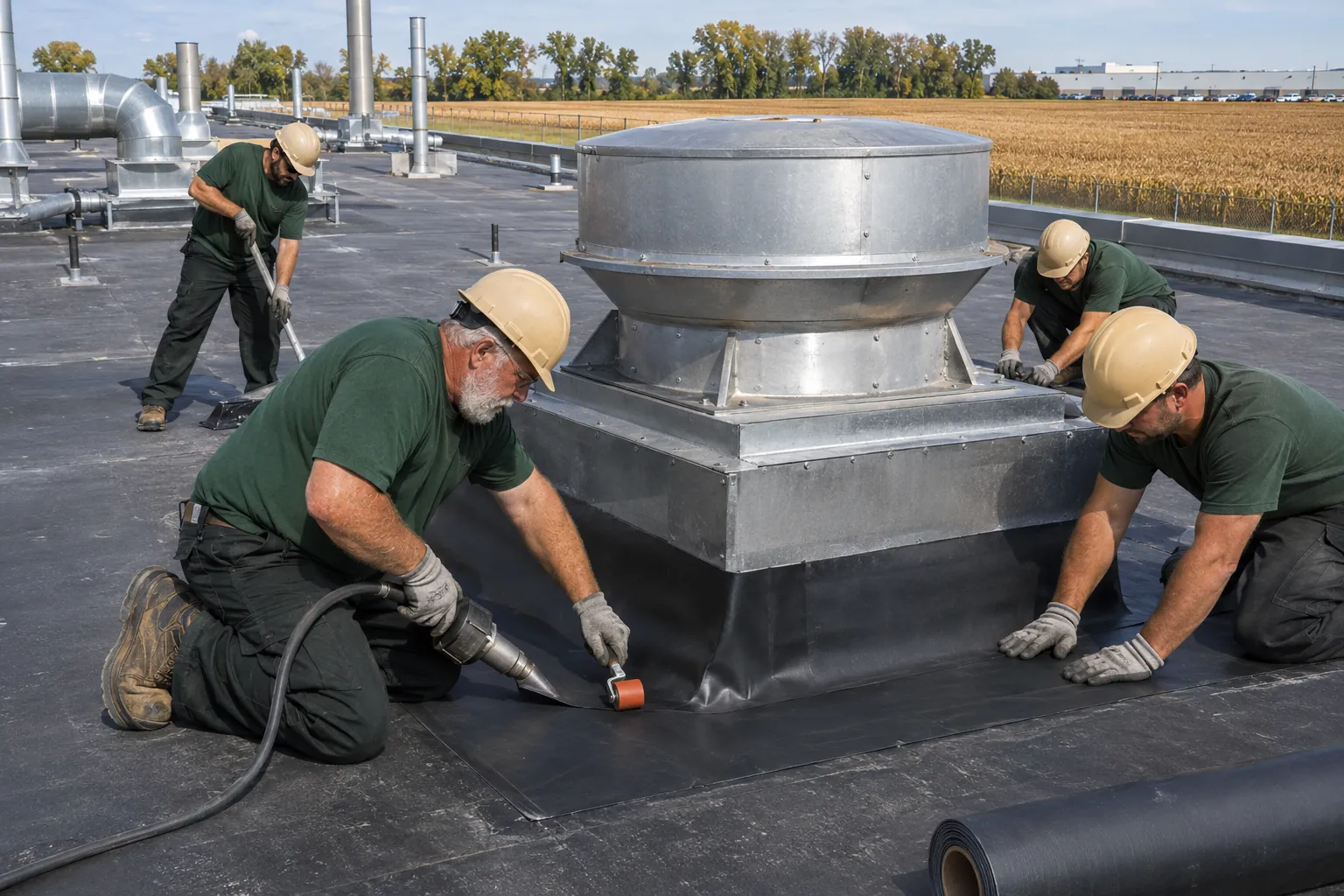
Plant and mill roofs with heavy equipment, exhaust, and heat, replaced in phases so production keeps running under the open section.
Kokomo Industrial Roofing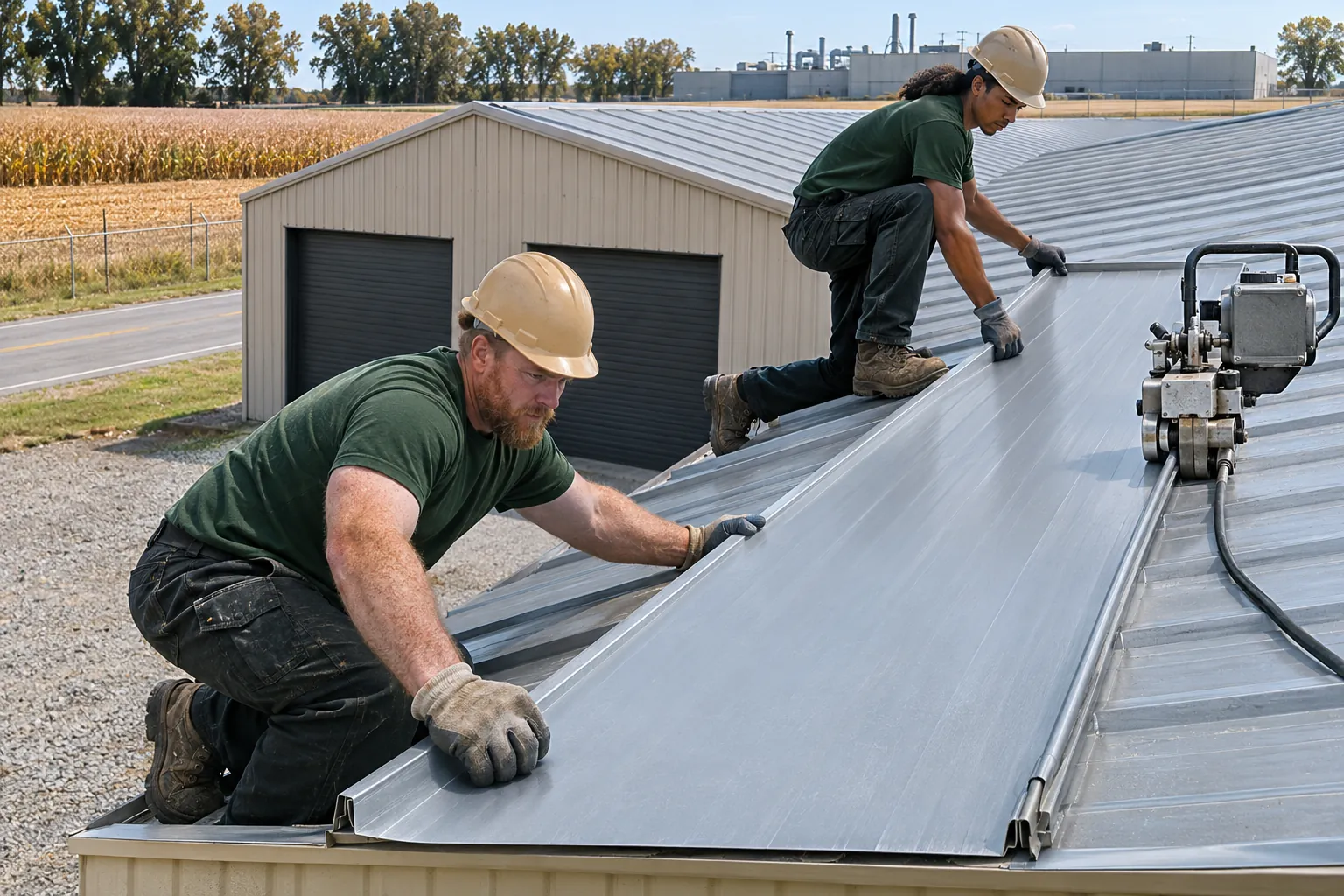
Standing seam and exposed-fastener panels for steel buildings and sloped roofs, including framed retrofits that add pitch over flat roofs.
Kokomo Commercial Metal RoofingTPO stands for thermoplastic polyolefin, a single-ply membrane sold in wide rolls and laid over insulation on flat and low-slope roofs. Here it is usually the white version, fastened to the deck or fully adhered, with seams melted together by hot air into one sheet.
Warehouses, offices, stores, and plants use it because it is light, reflective, and easy to repair.
Most TPO problems trace back to workmanship. Seams welded at the wrong heat can open later, and tools dropped near equipment can puncture the sheet. Aged TPO gets harder to weld, which complicates repairs. Fastened roofs also need tight attachment at corners and edges for winter wind.
Good welds, walkway pads, and careful flashing handle most of it.
They age in different ways. Welded TPO seams rarely open when installed right, and repairs are welded on as well. EPDM seams depend on tape and adhesive that need checks as the roof gets older, though the rubber stays flexible in the cold.
Either way, open drains, tight curb flashing, and walkway pads near units cut repair calls the most.
Often. A distribution warehouse has a large, open, low-slope roof, and wide TPO rolls with welded seams cover that area with fewer joints. The white surface runs cooler in summer, and installation goes section by section while trucks keep loading below.
Skylights, hatches, and drains along the long runs get the closest flashing work.
A white TPO sheet reflects more sunlight than black membrane, so the roof surface stays cooler on hot days and less heat moves into the building. How much that matters comes down to insulation, ventilation, and the work going on inside.
Black EPDM takes on more heat, which helps melt snow in winter, so building use decides the trade-off.
Send us the building address and what you see on the roof, and we will set up a free TPO inspection with cores.